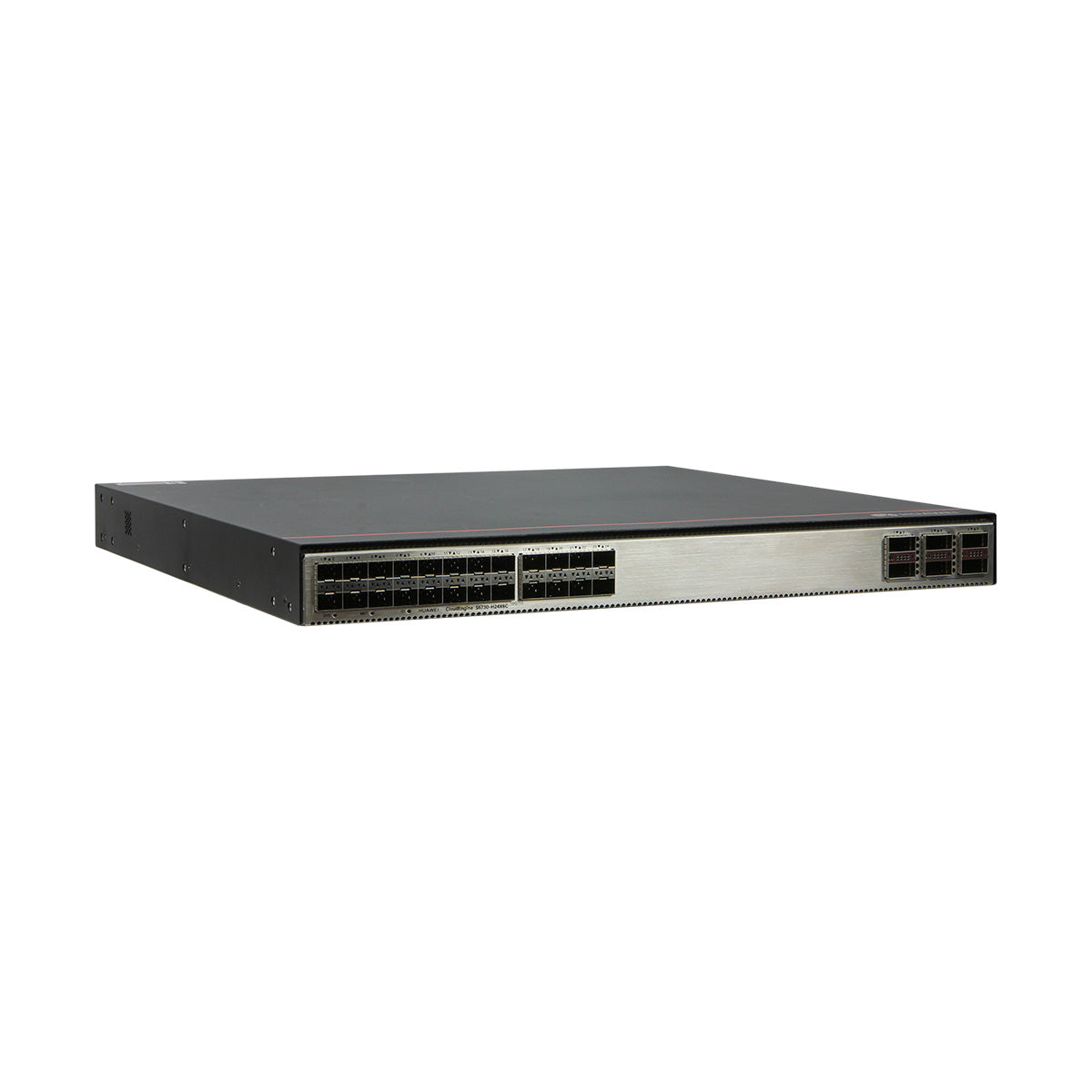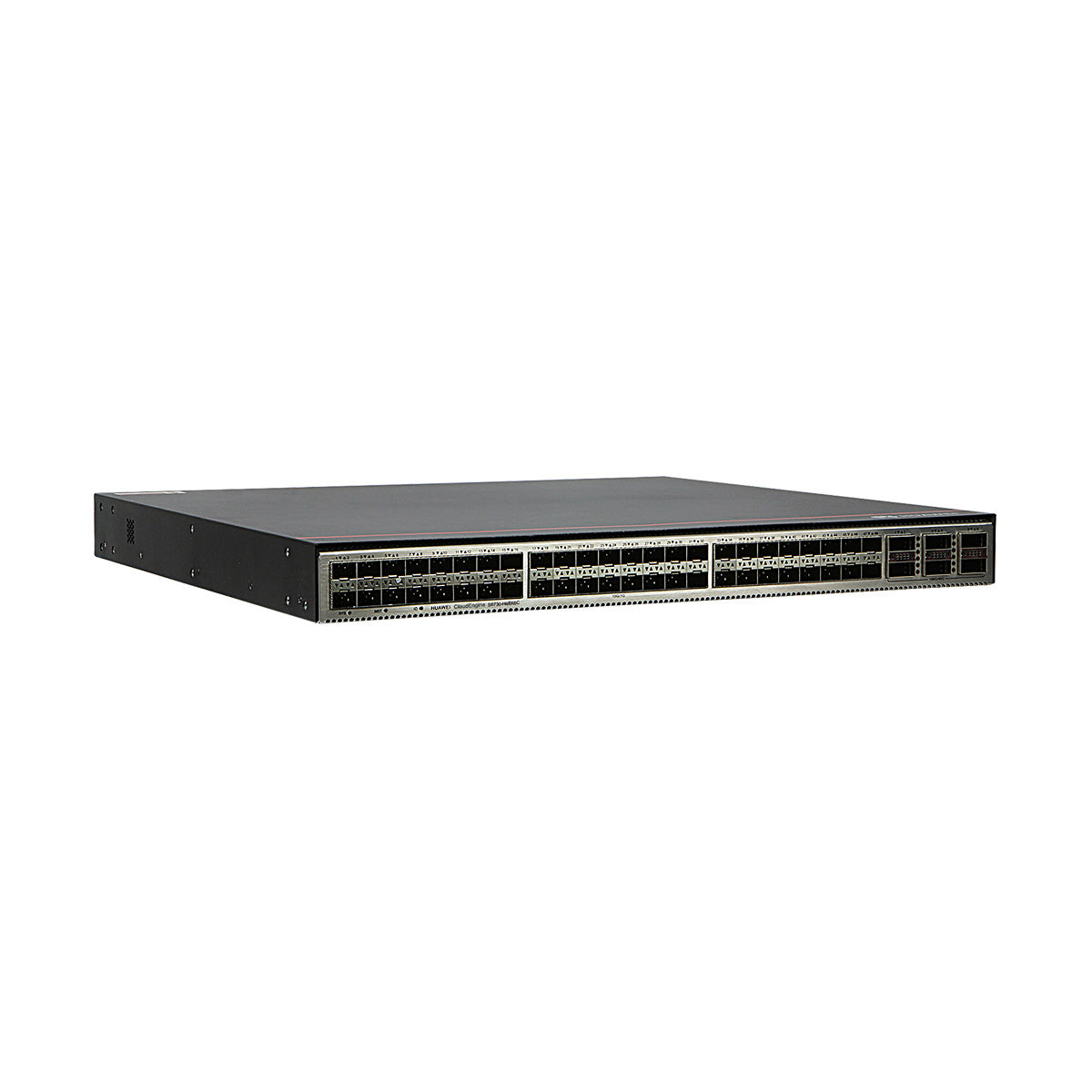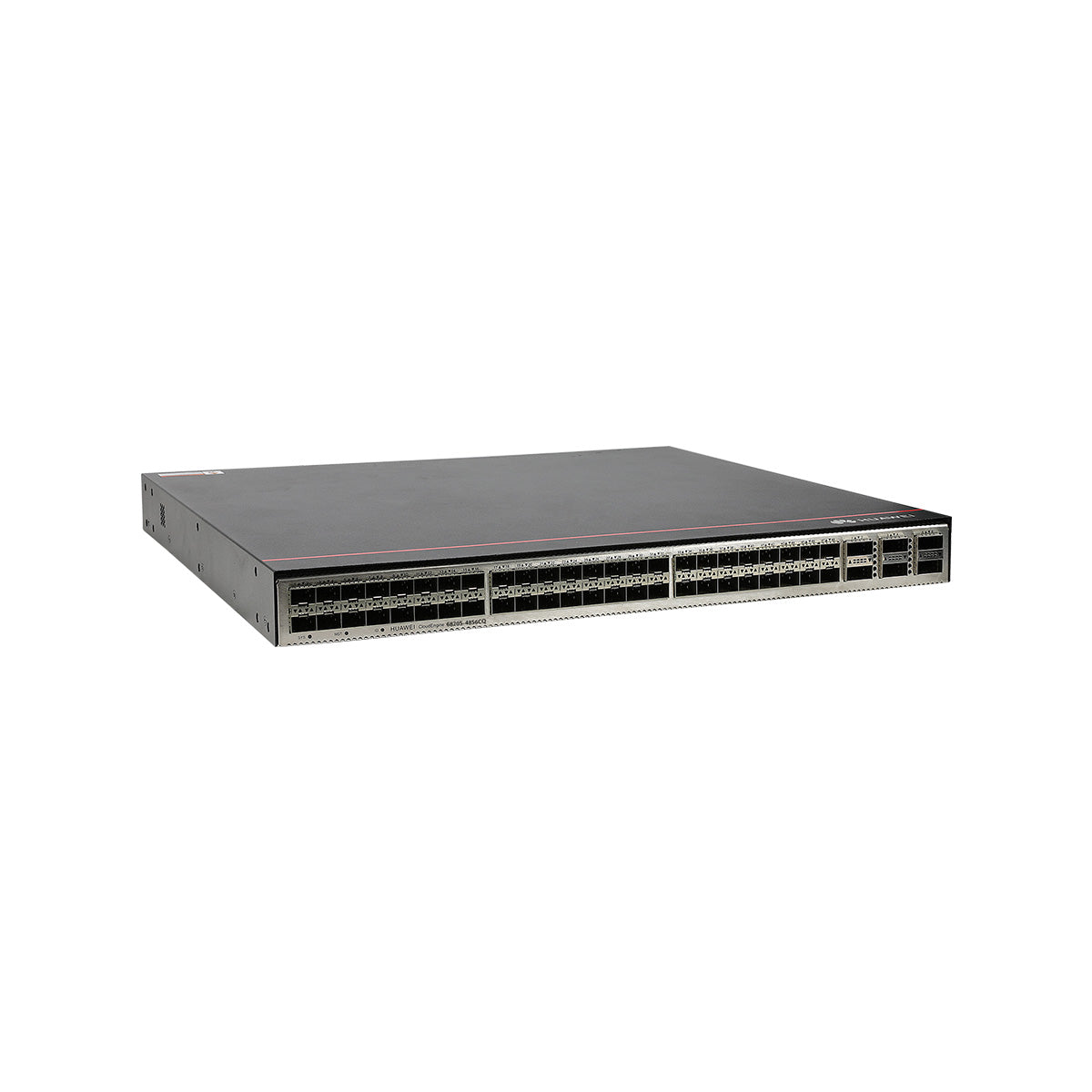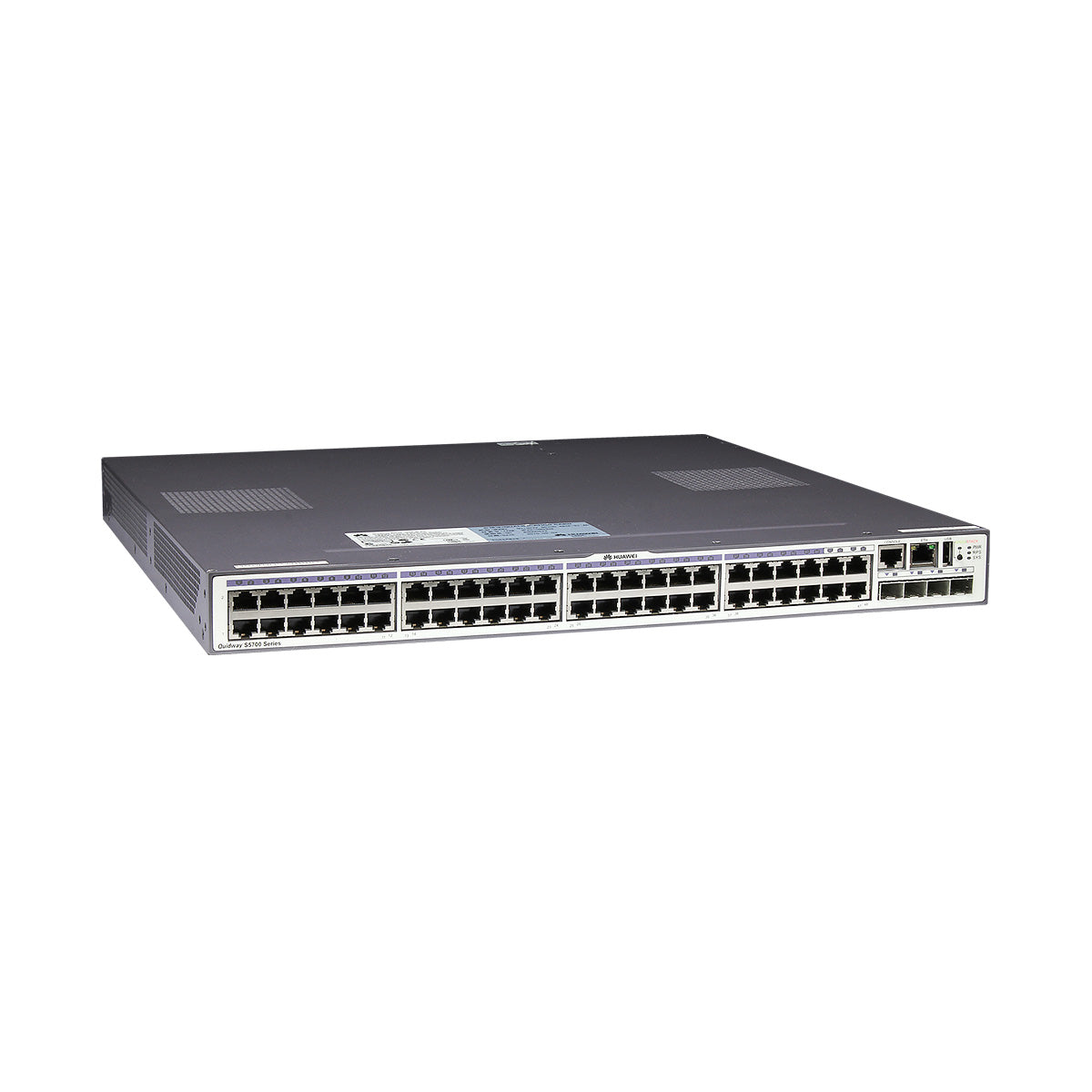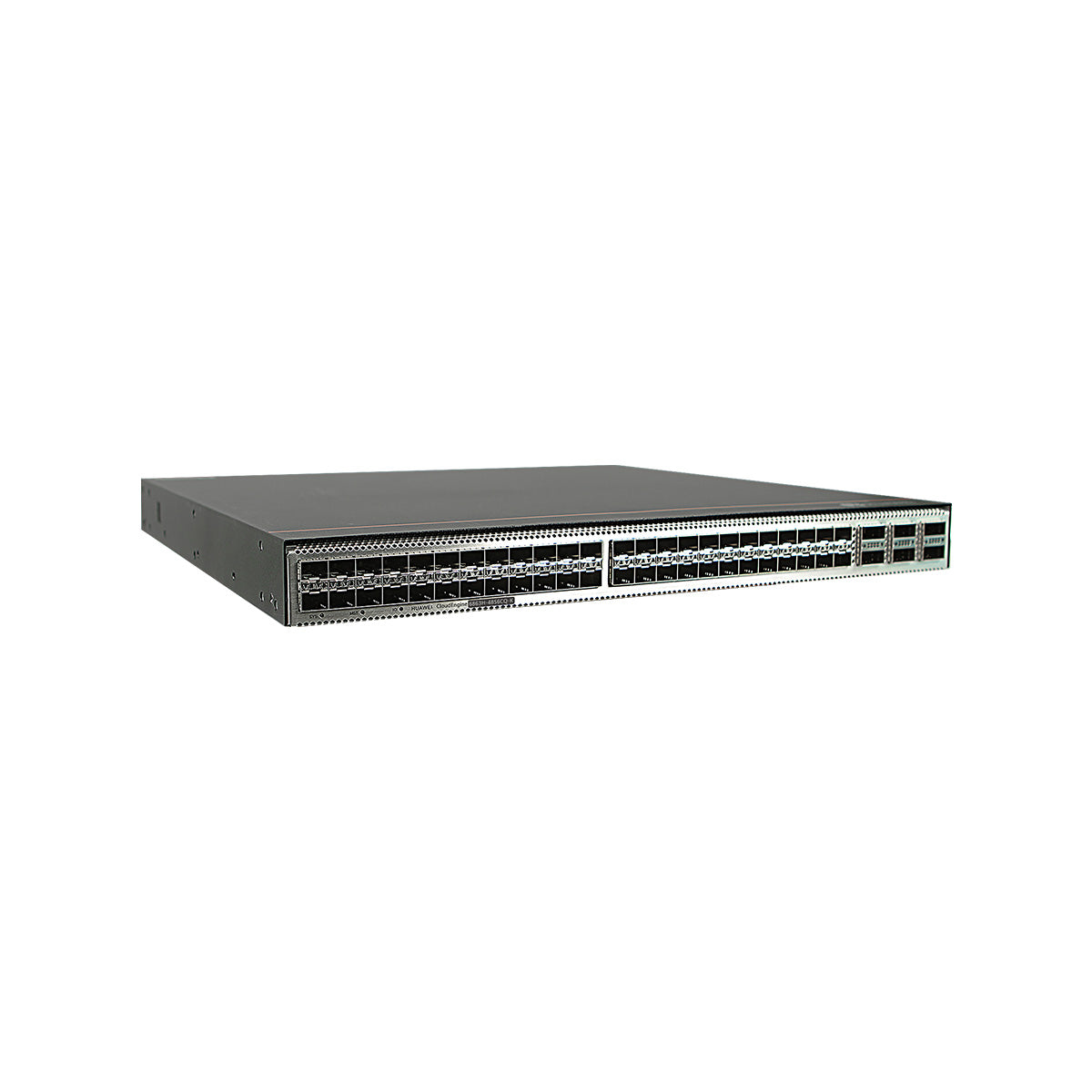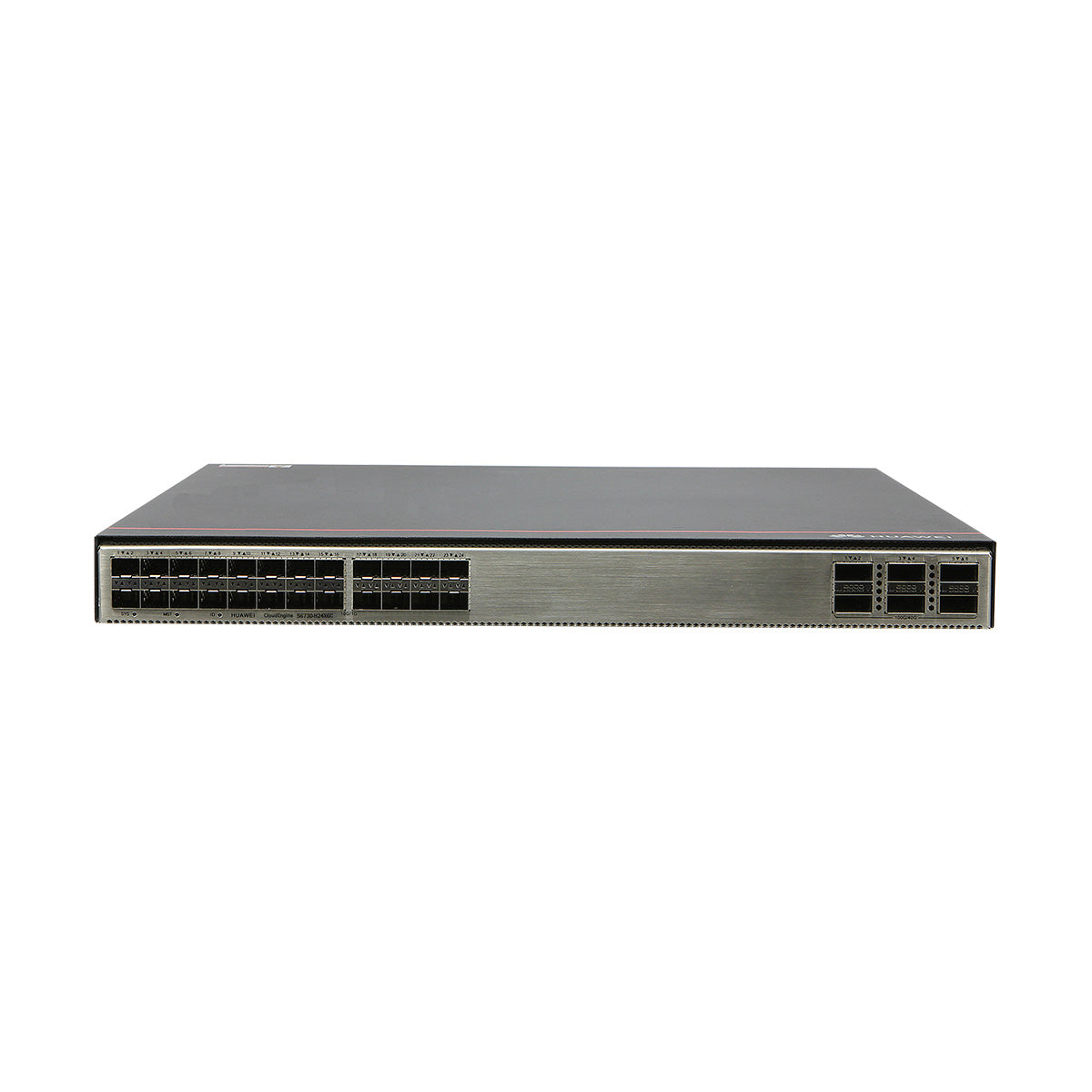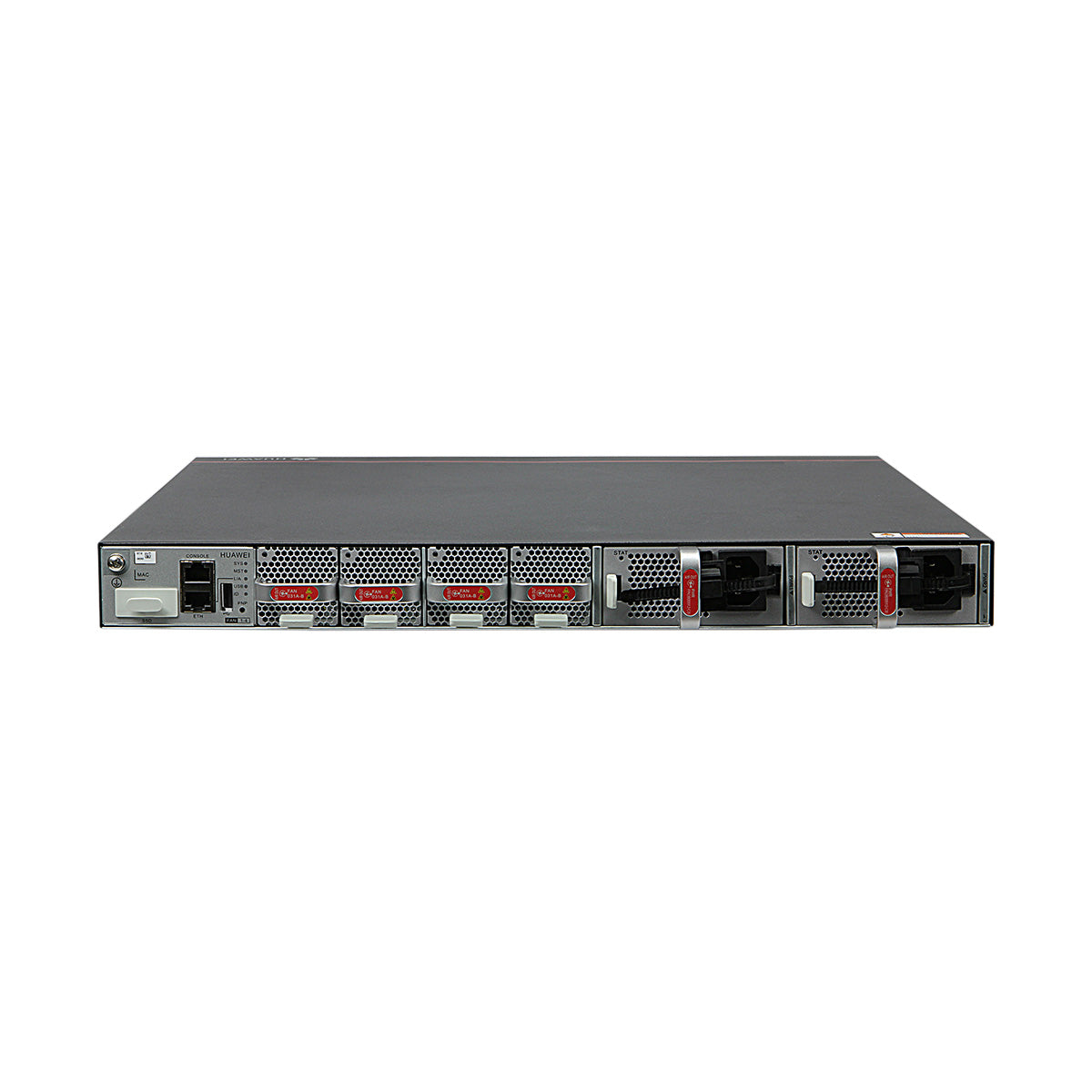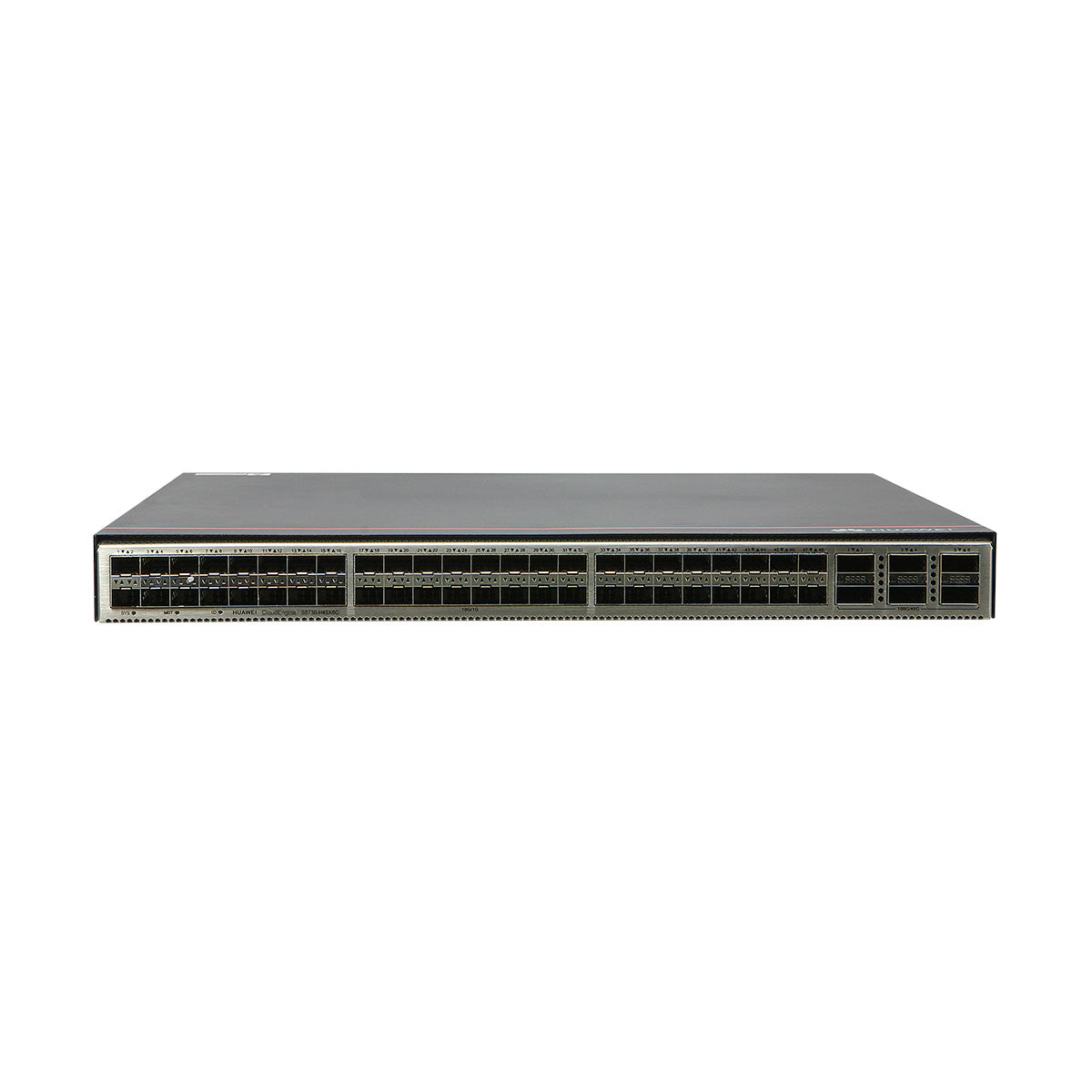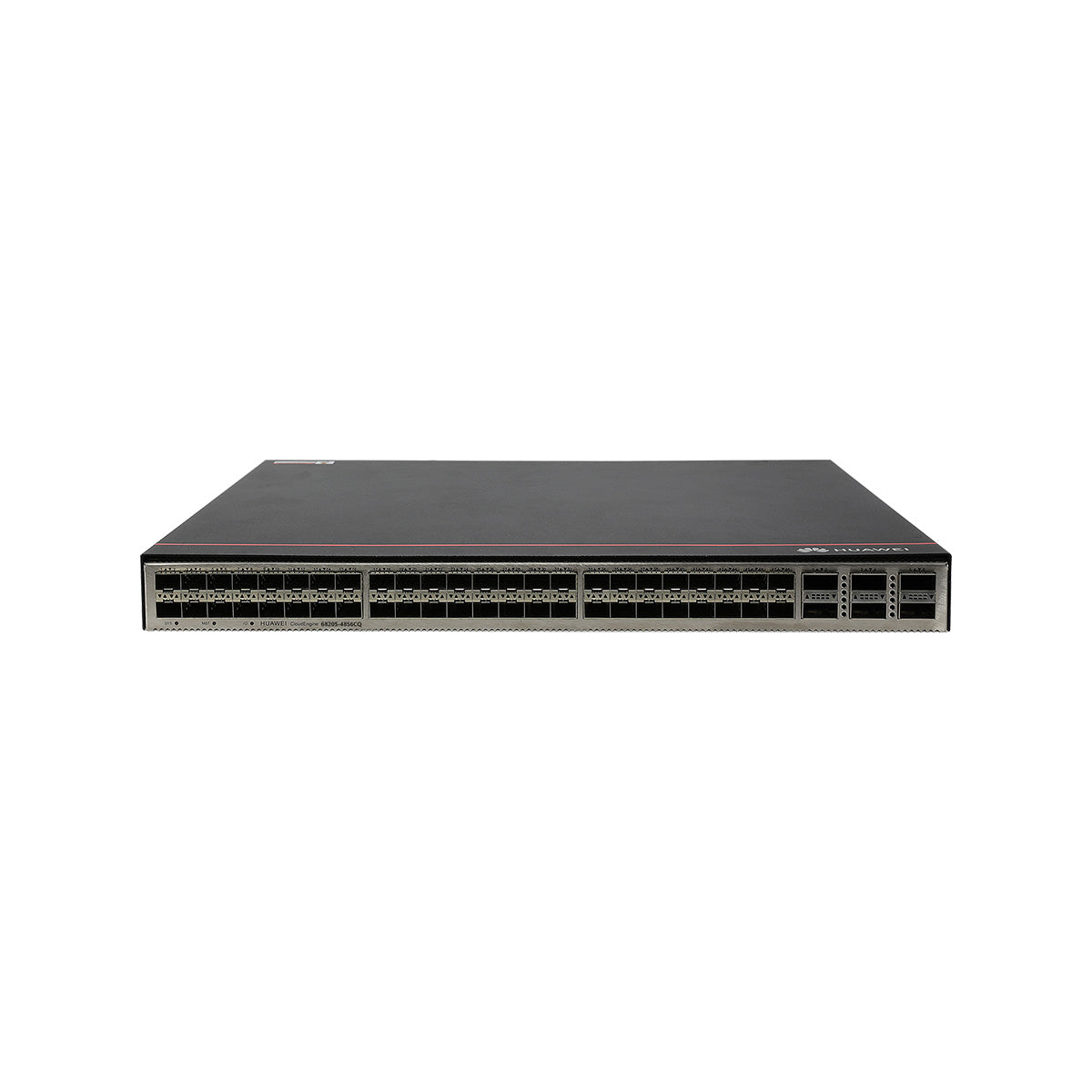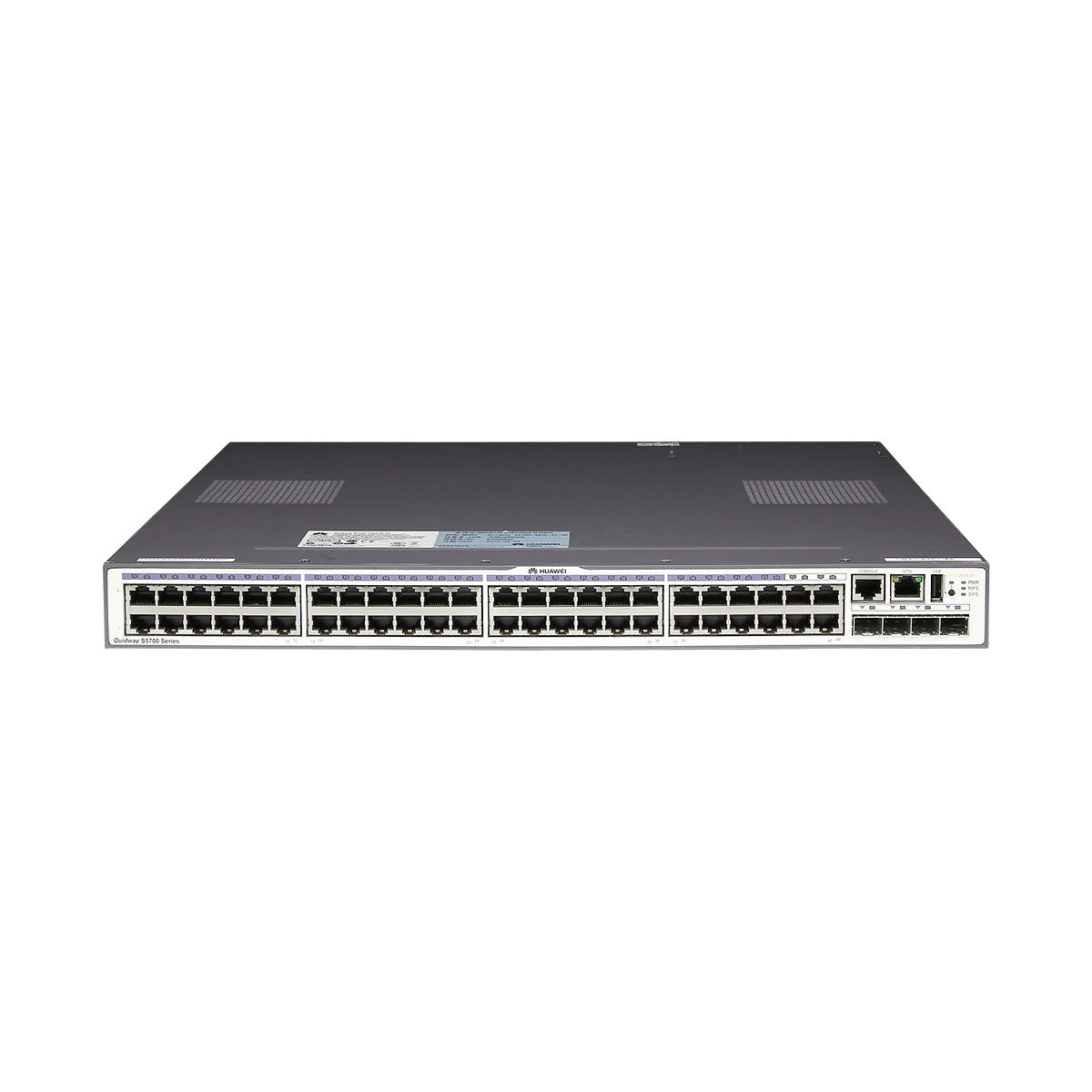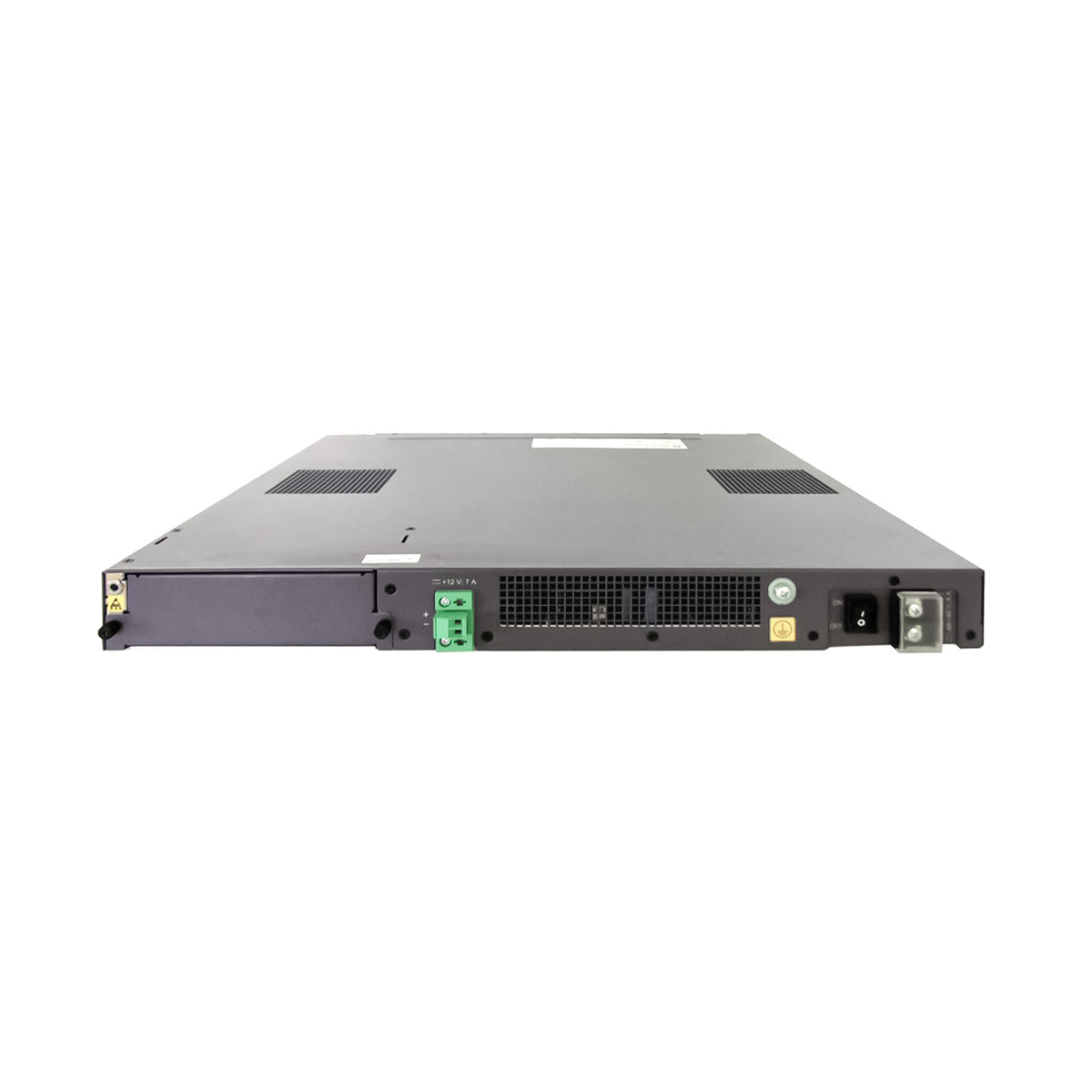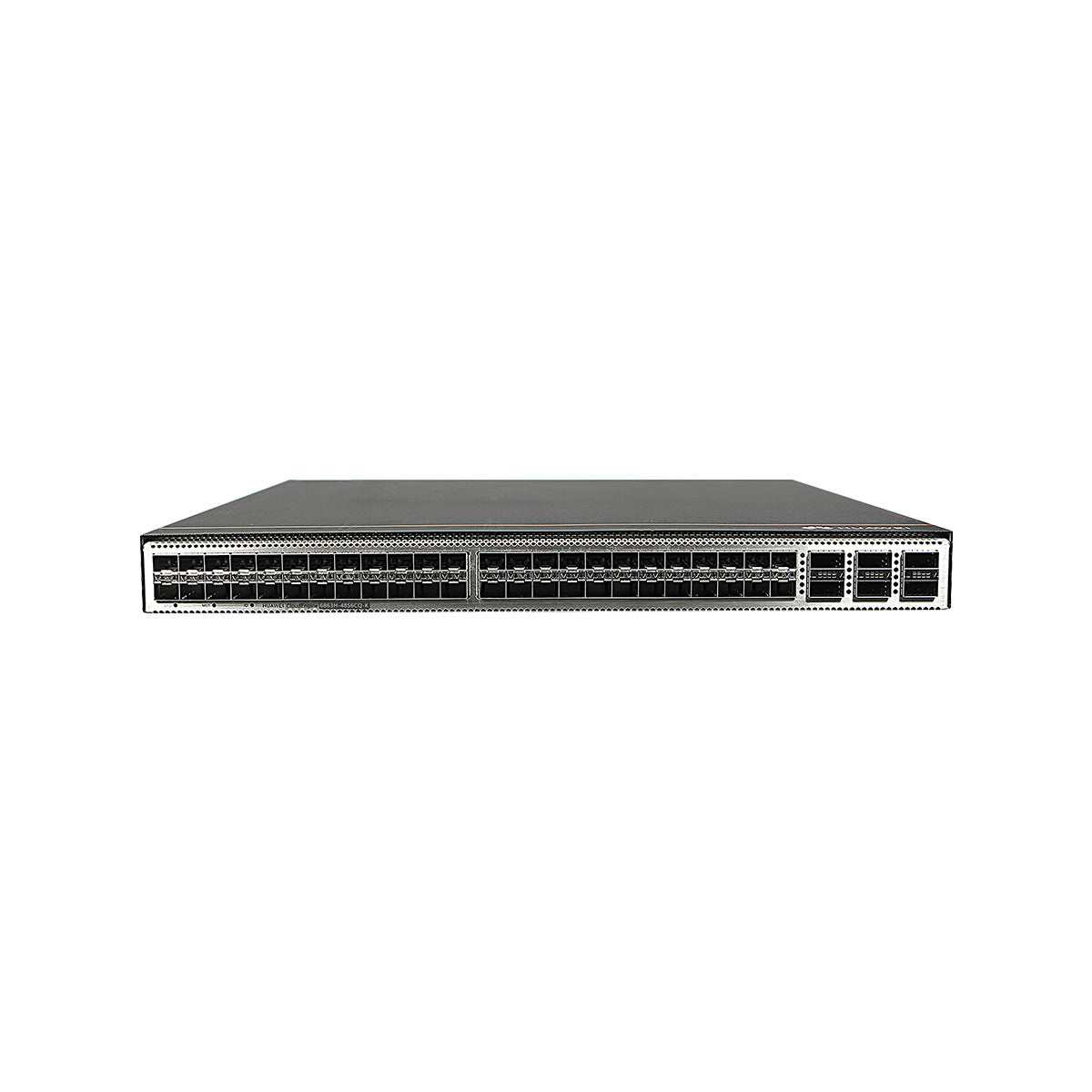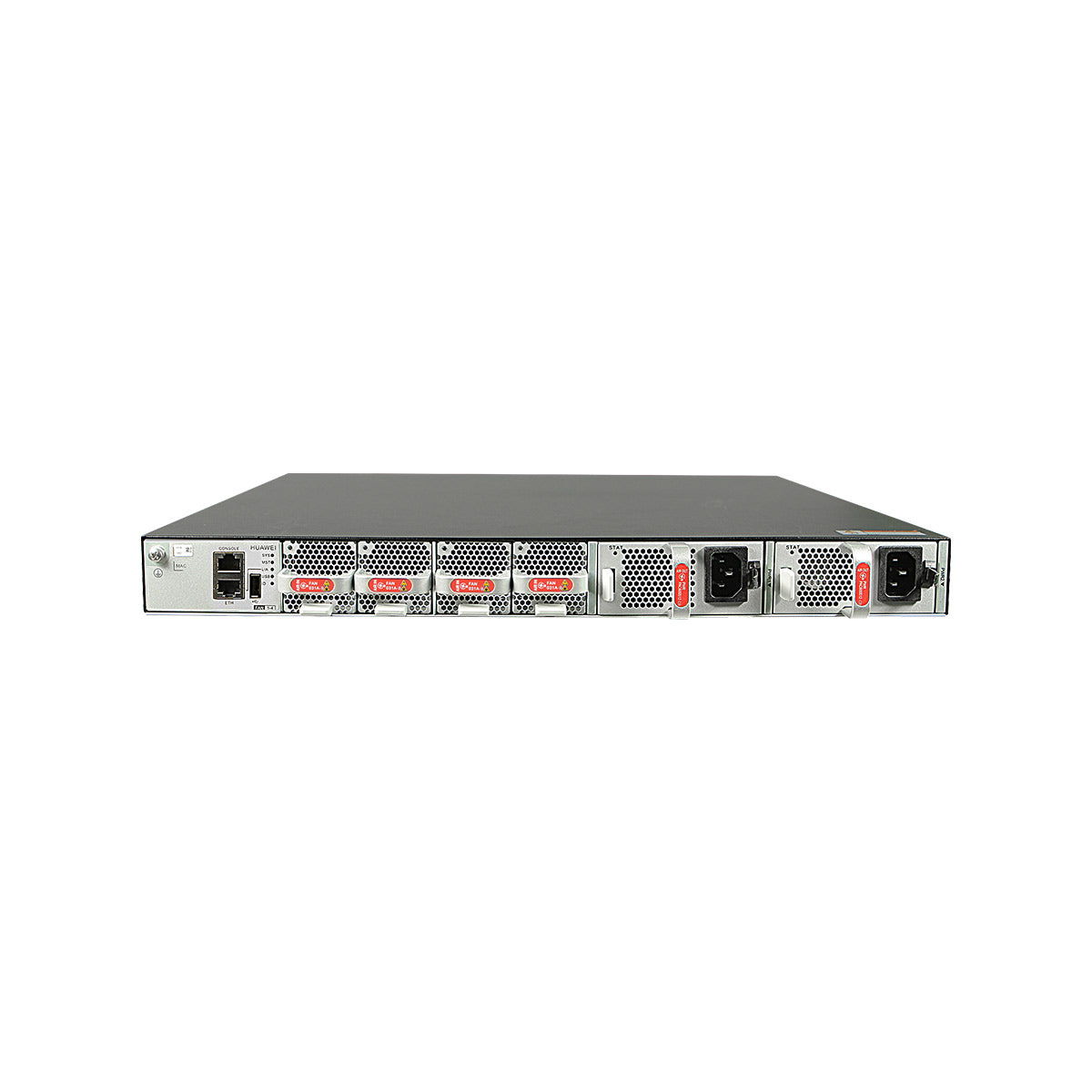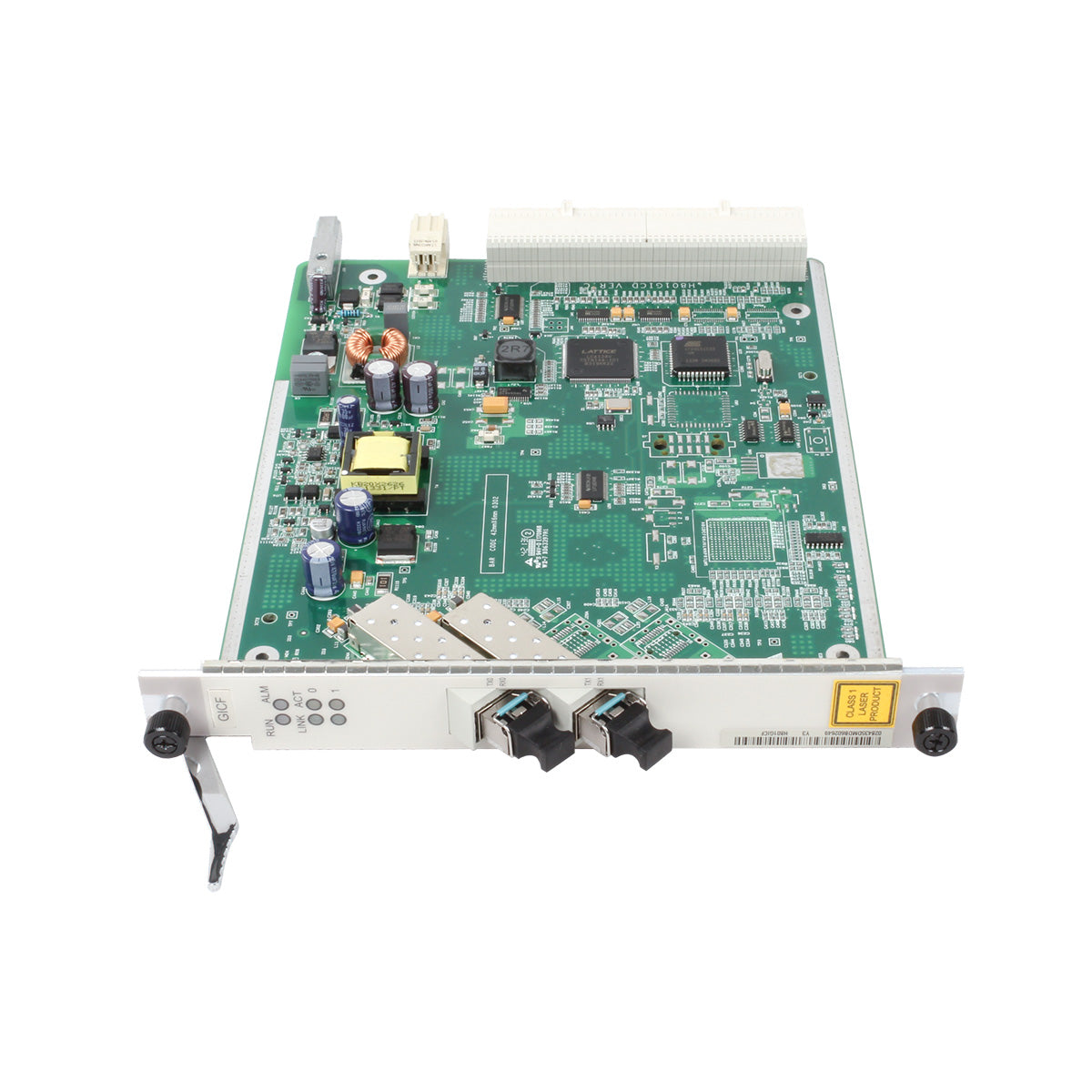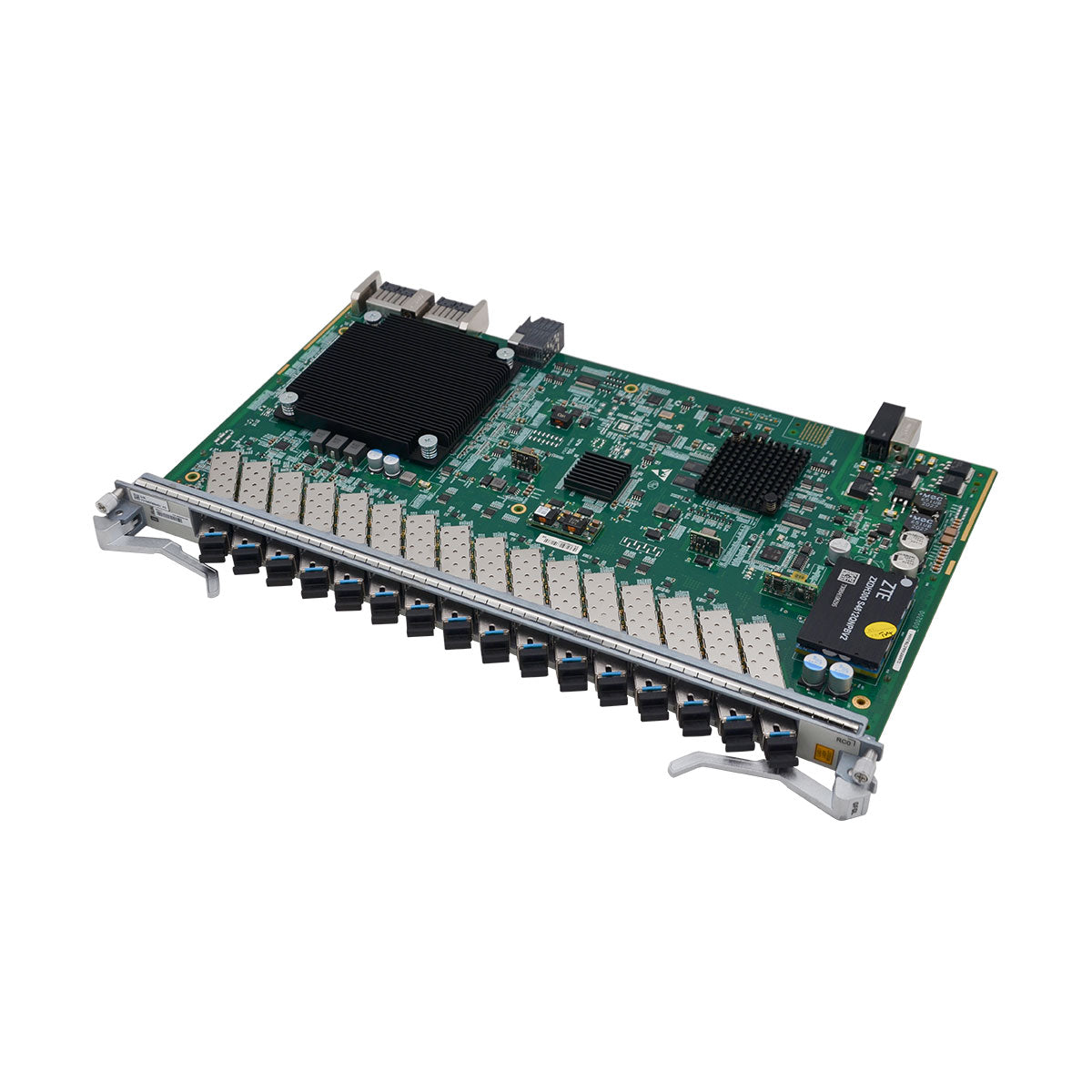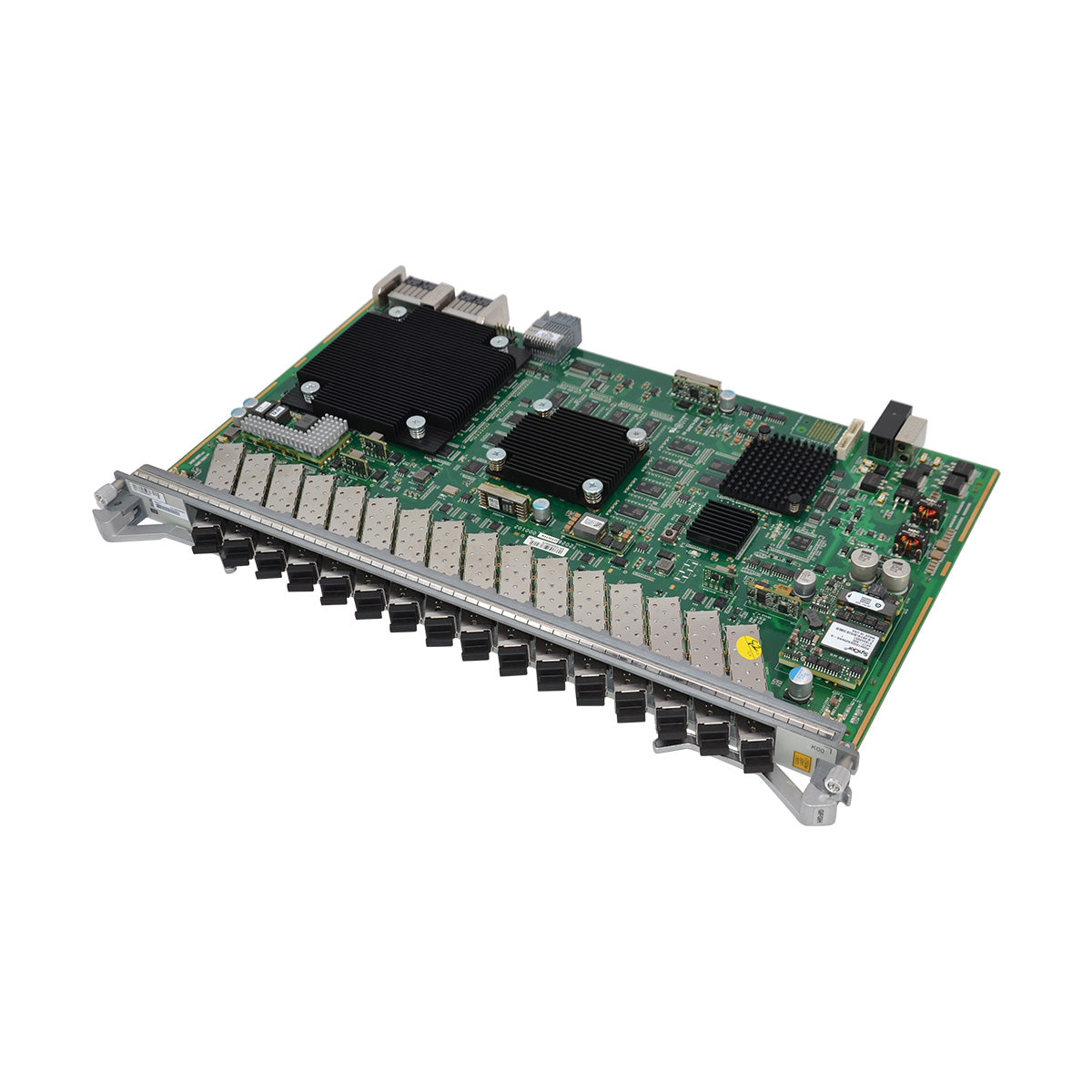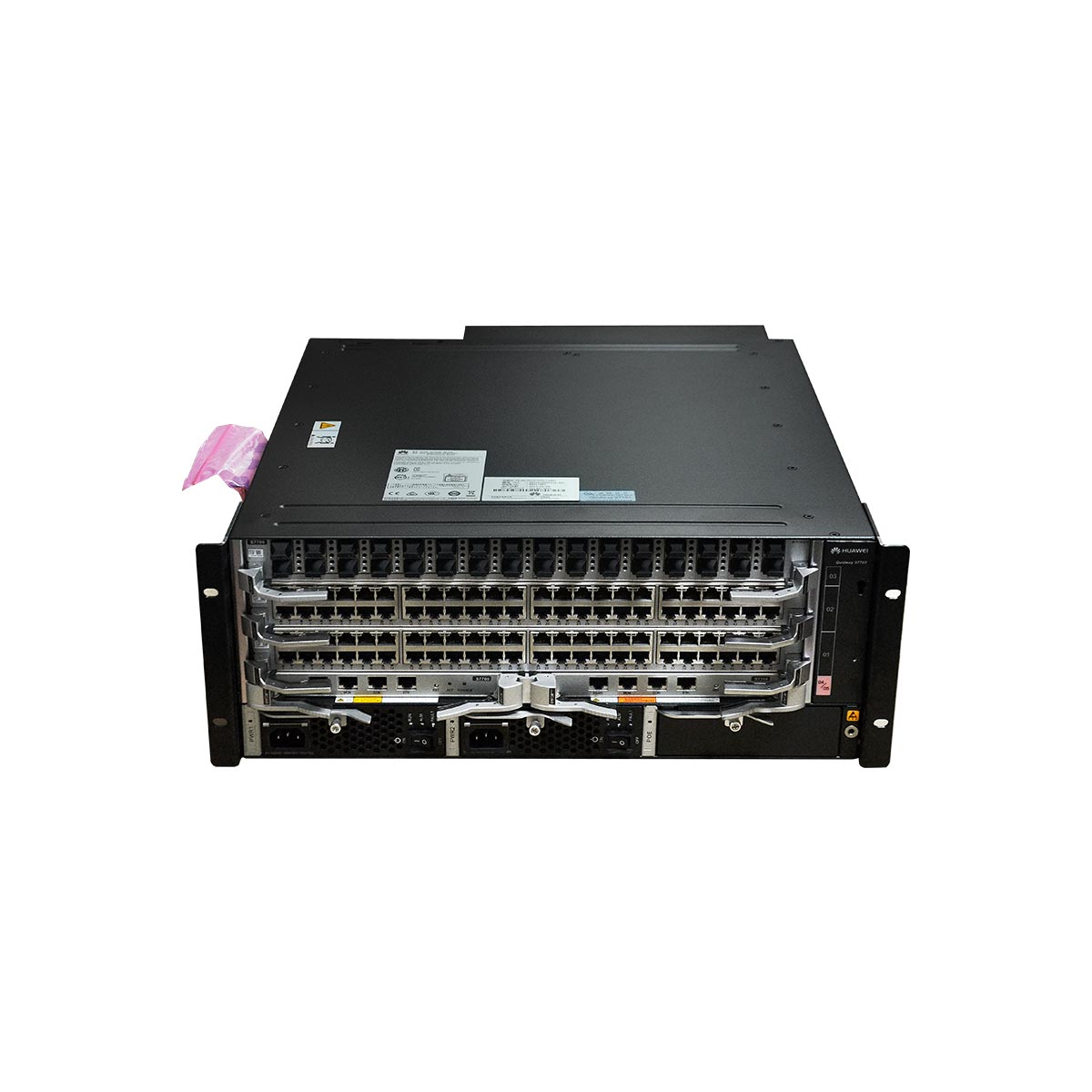
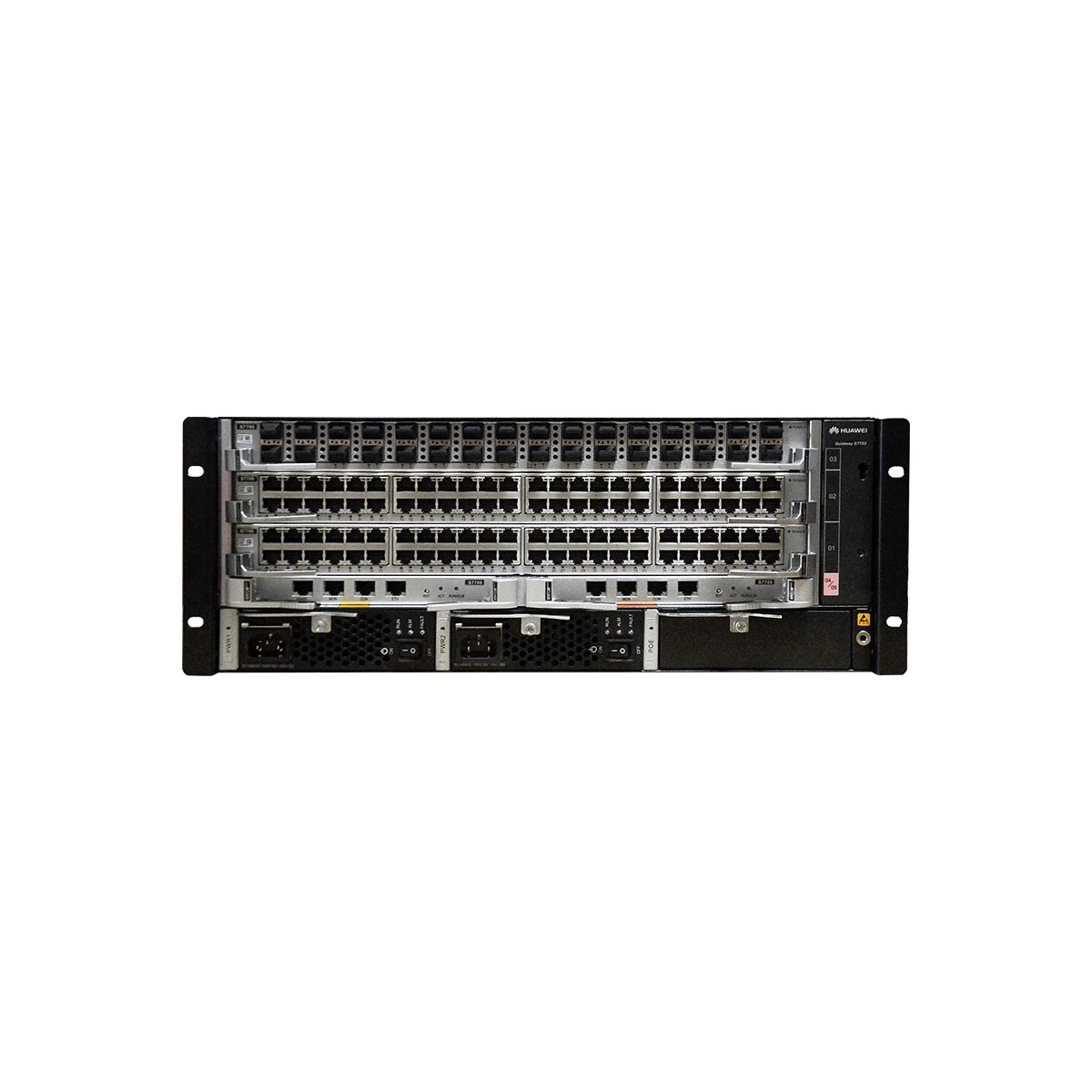
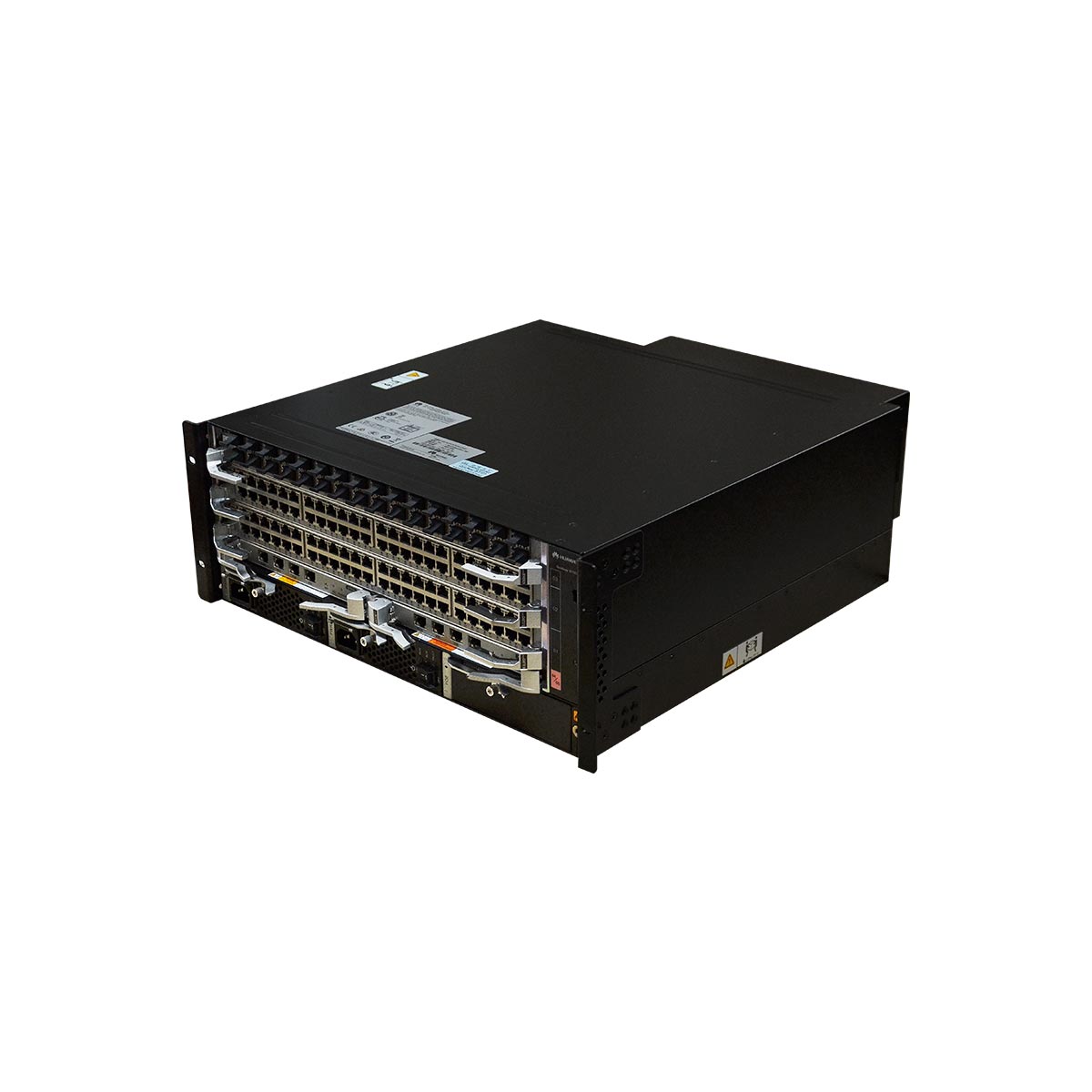
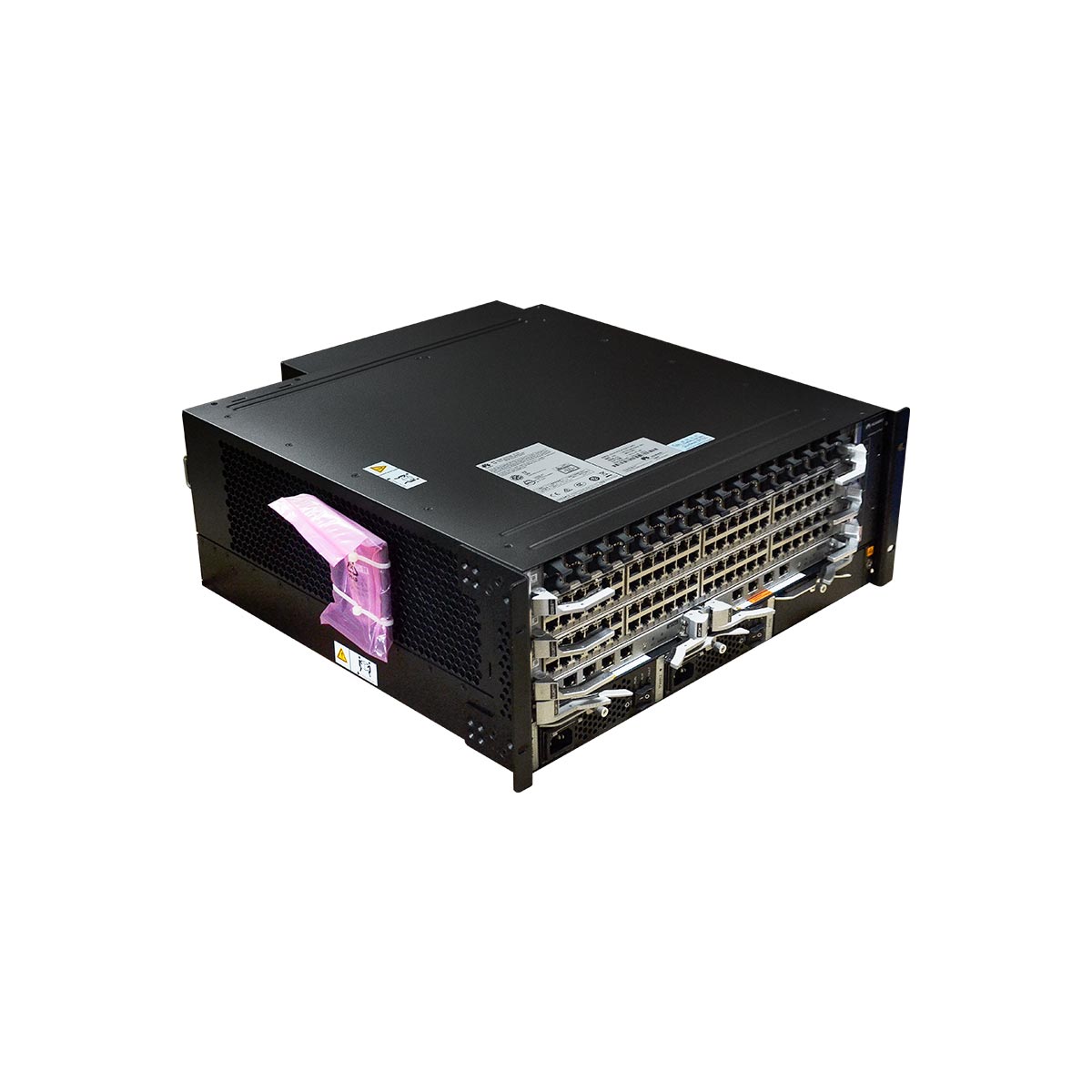




Huawei Integrated S7703 bundle with assembly chassis, 2xES0D00MCUA00 Main Control Unit A, 2x W2PSA0800 AC power module
The S7703 chassis is 4 U high (1 U = 44.45 mm). When the chassis has no cable management frame installed, the dimensions (H x W x D) are 175 mm x 442 mm x 517.4 mm. When the chassis has cable management frames installed, the dimensions (H x W x D) are 175 mm x 442 mm x 585 mm.
The S7703 chassis provides 3 LPU slots, 2 MCU slots, 2 system power supply slots, and 1 PoE power supply slot.
Note: S7703 has two types of chassis, one is S7703 PoE chassis with PoE; the other is S7703 chassis without PoE(our product photo is without PoE type).
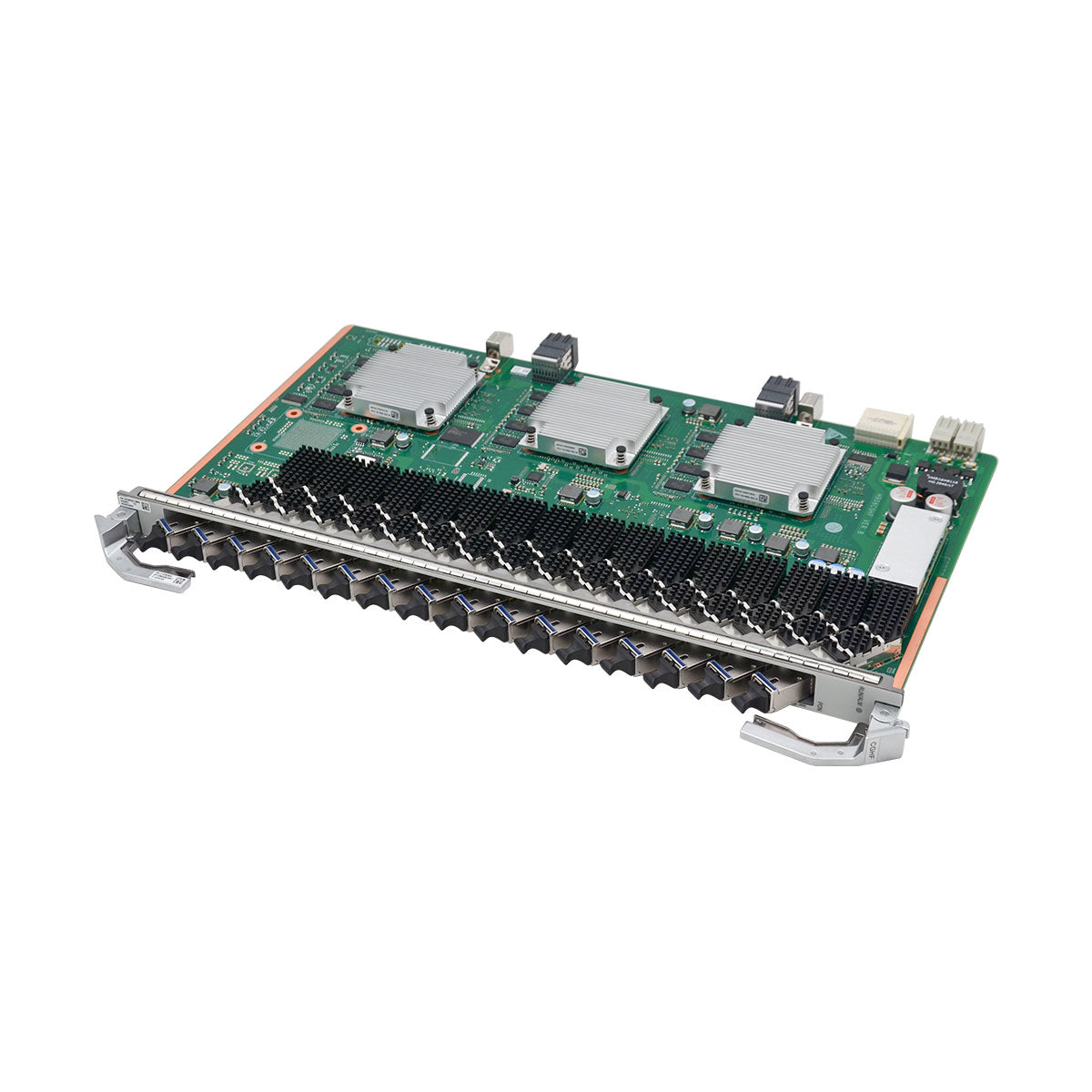
S7703 chassis by default has no service cards installed. You can choose three of the following service cards below:
Value-Added Service Unit
Open Service Platform Unit
100M Interface Card
1000M Interface Card
GE/10GE Interface Card
10GE Interface Card
40GE Interface Card
40GE/100GE Interface Card
100GE Interface Card
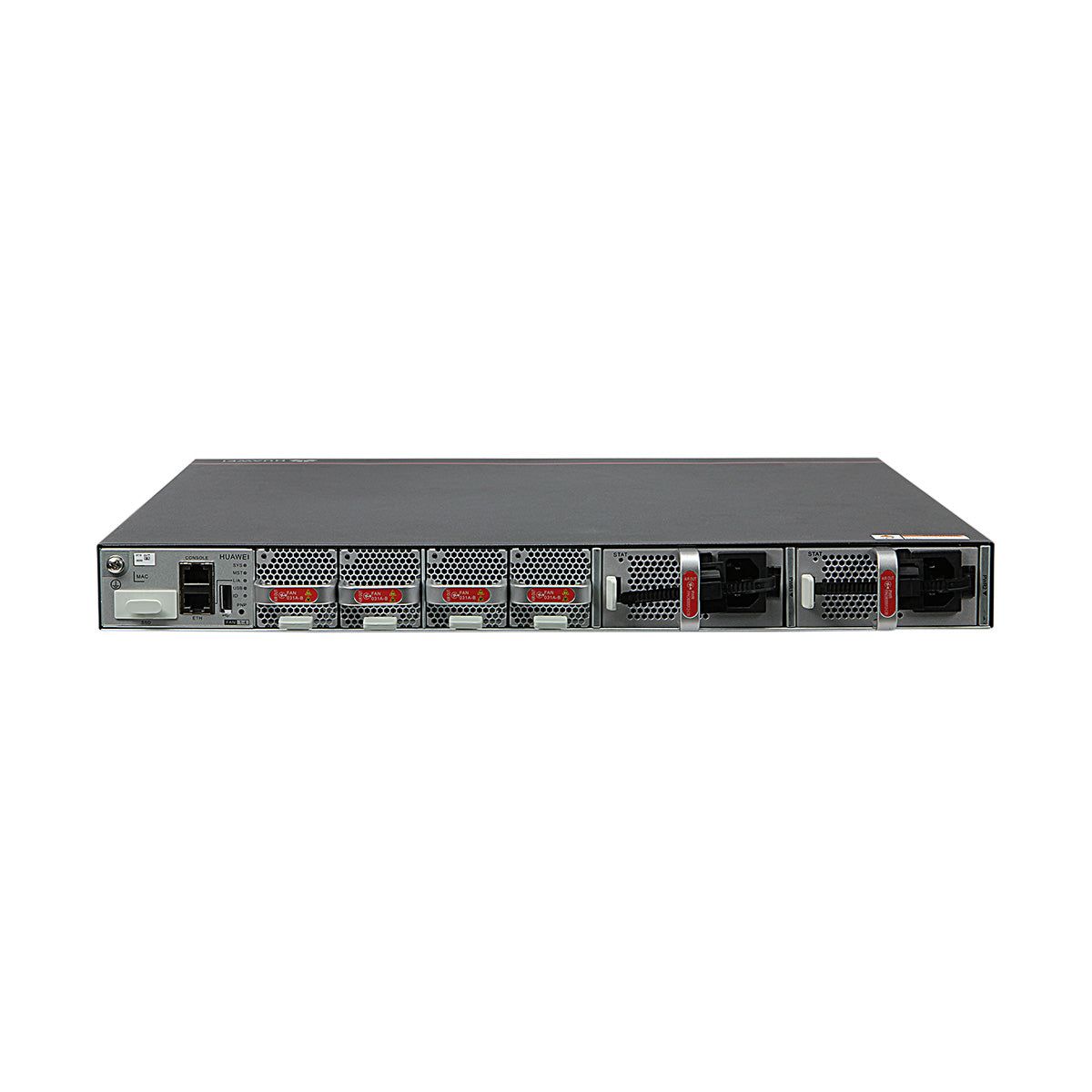
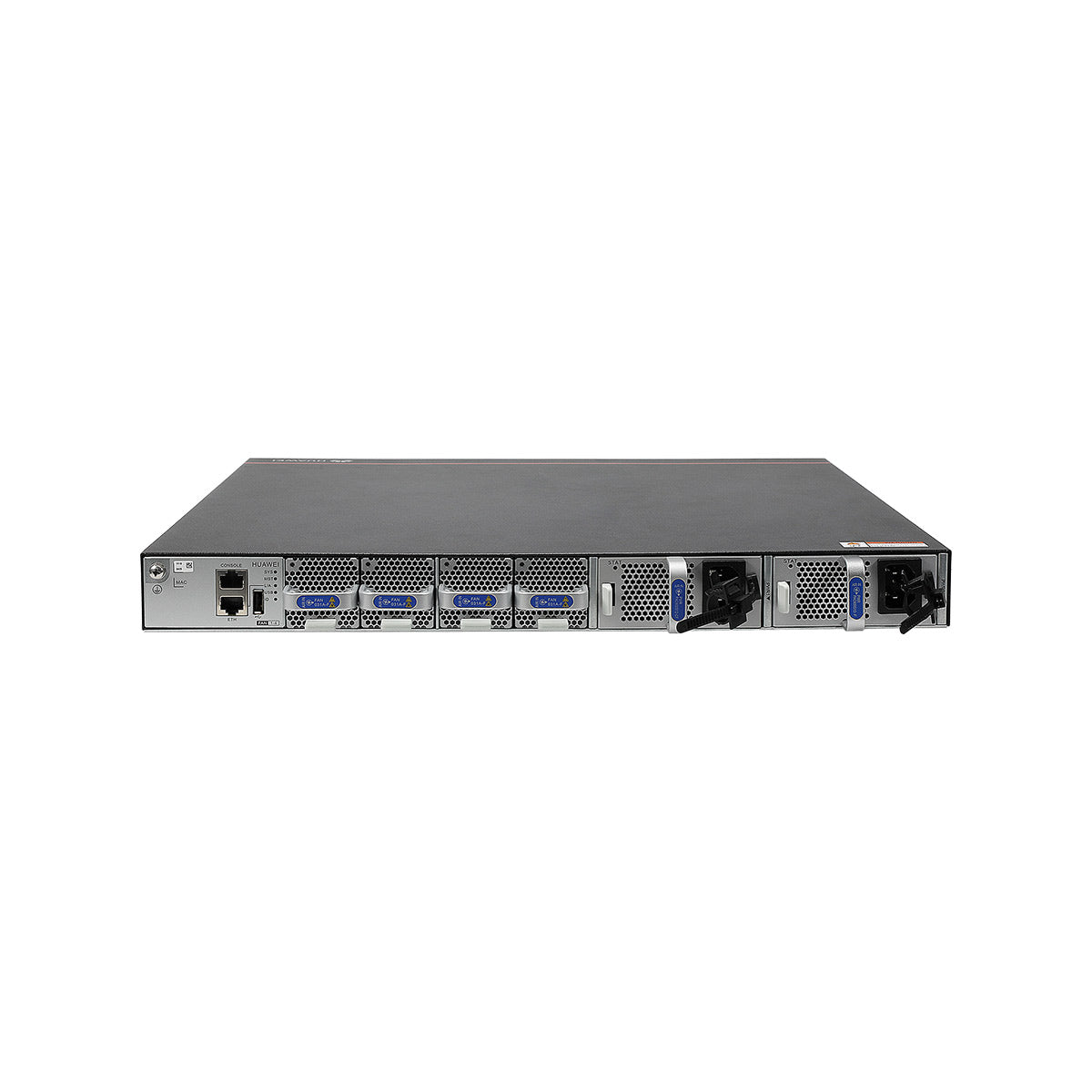
The S7703 chassis provides two system power supply slots: PWR1 and PWR2, which support DC and AC power modules. PWR1 is in area A, and PWR2 is in area B.
The S7703 cooling system consists of fan modules and air filters. A fan module is located behind the air exhaust vent (rear of the chassis), and an air filter is located outside the air intake vent (left side of the chassis).
The S7700 series switches (S7700 for short) are high-end smart routing switches designed for nextgenerationenterprise networks. The S7700 design is based on Huawei’s intelligent multi-layer switching technology to provide intelligent service optimization methods, such as MPLS VPN, traffic analysis, comprehensive H-QoS policies, controllable multicast, load balancing, and security, in addition to high-performanceLayer 2 to Layer 4 switching services.
| Item | Description |
| Switching capacity | 1440/14400Mpps |
| Packet forwarding rate | 15.36/40.00Tbps |
| Service Slot | 3 |
| MPU slots | 2 |
| Maximum port density | V100R006C00 version: 144×FE,144×GE,36×10GE |
| V200R001C00 version: 144×FE,144×GE,120×10GE | |
| V200R002C00~V200R007C00 version:144×FE,144×GE,120×10GE,6×40GE | |
| V200R008C00~V200R009C00 version:144×FE,144×GE,120×10GE,6×40GE,6×100GE | |
| V200R010C00 or later version:144×FE,144×GE,144×10GE,24×40GE,12×100GE | |
| Wireless network | Native AC |
| management | AP access control, AP region management, and AP profile management |
| Radio profile management, uniform static configuration, and centralized | |
| dynamic management | |
| Basic WLAN services, QoS, security, and user management | |
| Deployment of ACs on different network layers | |
| User management | Unified user management |
| 802.1x, MAC address, and Portal authentication | |
| Traffic- and time-based accounting | |
| User authorization based on user groups, domains, and time ranges | |
| VLAN | Three types of interfaces: access, trunk, and hybrid |
| Default VLAN | |
| VLAN switching | |
| QinQ and selective QinQ | |
| MAC address-based VLAN assignment | |
| MAC address | MAC address learning and aging. |
| Static, dynamic, and blackhole MAC address entries | |
| Packet filtering based on source MAC addresses | |
| Limit on the number of MAC addresses learned on ports and VLANs | |
| Ring Protection | STP(IEEE 802.1d), RSTP(IEEE 802.1w), and MSTP(IEEE 802.1s) |
| SEP | |
| BPDU protection, root protection, and loop protection | |
| BPDU tunnel | |
| ERPS (G.8032) | |
| IP routing | IPv4 routing protocols, such as RIPv1/v2, OSPF, BGP, and IS-IS |
| IPv6 dynamic routing protocols, such as RIPng, OSPFv3, ISISv6, and BGP4+ | |
| Multicast | IGMPv1/v2/v3 and IGMP v1/v2/v3 snooping |
| PIM-DM, PIM-SM, and PIM-SSM | |
| MSDP and MBGP | |
| Fast leave | |
| Multicast traffic control | |
| Multicast querier | |
| Multicast packet suppression | |
| Multicast CAC | |
| Multicast ACL | |
| MPLS | Basic MPLS functions |
| MPLS OAM | |
| MPLS-TE | |
| MPLS VPN/VLL/VPLS | |
| Reliability | LACP and E-Trunk between devices |
| VRRP and BFD for VRRP | |
| BFD for BGP/IS-IS/OSPF/static route | |
| NSF and GR for BGP/IS-IS/OSPF/LDP | |
| TE FRR and IP FRR | |
| ITU-Y.1731 | |
| DLDP | |
| QoS | Traffic classification based on Layer 2 protocol packet header, Layer 3 protocol |
| information, Layer 4 protocol information, and 802.1p priority | |
| ACL, CAR, re-mark, and scheduling | |
| Queue scheduling algorithms including SP, WRR, DRR, SP+WRR, and SP+DRR | |
| Congestion avoidance mechanisms, such as WRED and tail drop | |
| H-QoS | |
| Traffic shaping | |
| Security and management | 802.1x authentication and portal authentication |
| NAC | |
| RADIUS and HWTACACS authentication | |
| Different user levels for commands, preventing unauthorized users from using | |
| certain command | |
| Defense against DoS attacks, TCP SYN Flood attacks, UDP Flood attacks, | |
| broadcast storms, and heavy traffic attack | |
| Ping and traceroute | |
| RMON | |
| Service Chain | |
| Interoperability | Supports VBST (Compatible with PVST/PVST+/RPVST) |
| Supports LNP (Similar to DTP) | |
| Supports VCMP (Similar to VTP) | |
| Power supply | AC:90 V to 290 V |
| Dimensions (mm) | 442 mm x 476 mm x 175 mm |
| Weight | 10 kg |
| Maximum power | 1000 W |
| consumption of the entire | |
| equipment | |
| Maximum PoE power | 2200 W |