


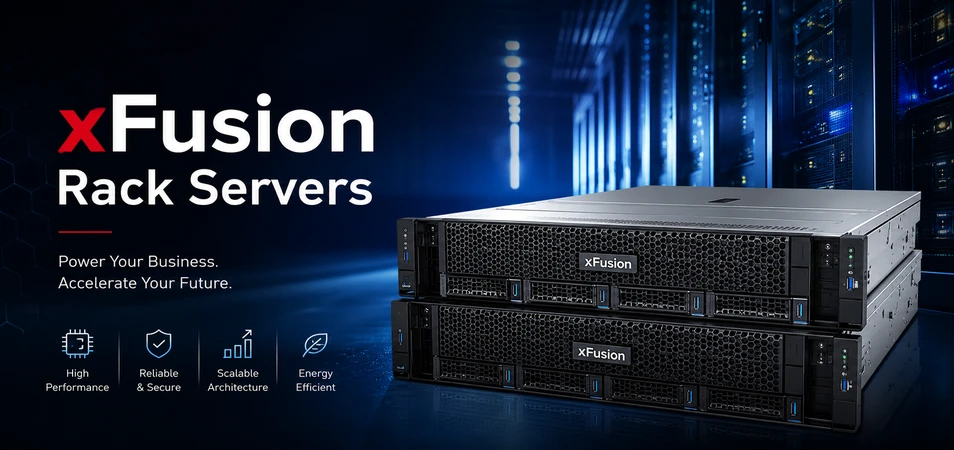
As digital transformation accelerates, businesses require server platforms that deliver performance, scalability, energy efficiency, and intelligent lifecycle management. xFusion’s FusionServer rack server offers a comprehensive range of enterprise-class solutions designed for cloud computing, virtualization, AI, big data, databases, and mission-critical applications.
Originally evolving from Huawei’s server technology foundation, xFusion has expanded the FusionServer family into a globally recognized infrastructure platform serving ISPs, enterprises, cloud providers, and data centers.
This guide provides a structured overview of xFusion’s major rack server series, key models, and ideal deployment scenarios.
1. Overview of xFusion Rack Server
xFusion’s rack servers range from dual-socket (2S) to four-socket (4S) platforms, covering diverse enterprise workloads.
Core Product Categories:
FusionServer 1288H Series (1U Rack Server)
Designed for:
High-density virtualization
Office applications
HPC entry deployments
Web hosting
Edge computing
Key Highlights:
1U compact form factor
Dual Intel Xeon Scalable processors
Up to 12 TB memory
Flexible NVMe/SAS/SATA storage
Suitable for customers prioritizing rack density and efficient compute scaling
Best For:
Telecom edge nodes
SME IT infrastructure
Private cloud expansion
High-density enterprise applications
FusionServer 2288H Series (2U Rack Server)
The most versatile and widely deployed xFusion server line.
Designed for:
Software-defined storage (SDS)
Virtual desktop infrastructure (VDI)
Cloud computing
Database services
Big data analytics
AI inference
Web applications
Key Highlights:
2U dual-socket platform
Up to 45 x 2.5” drives
Up to 34 NVMe SSDs
Extensive GPU support
Up to 19 PCIe slots (V7)
Strong balance of performance, scalability, and ROI
Best For:
ISPs
Enterprise virtualization
Cloud service providers
Large-scale business applications
FusionServer 2488H Series (4-Socket High-Performance Server)
Built for compute-intensive and mission-critical environments.
Designed for:
SAP HANA
OLTP/OLAP databases
In-memory databases
High-performance computing
Enterprise core systems
Key Highlights:
2U/4-socket architecture
Up to 64 DIMMs (V7)
Massive CPU and memory scalability
GPU acceleration options
Optimized for high consolidation ratios
Best For:
Financial institutions
Telecom core systems
Large ERP deployments
Mission-critical enterprise computing
FusionServer 5288 / 5298 Series (Storage-Optimized Servers)
Designed for:
Distributed storage
Cold and warm data storage
Backup systems
Archiving
Video storage
Big data retention
Key Highlights:
Large-capacity storage density
Up to 60 x 3.5” drives (5298 V7)
High storage-to-cost ratio
Suitable for data-heavy industries
Best For:
Data centers
Surveillance storage
Backup infrastructure
Object storage clusters
2. Key Competitive Advantages of xFusion Rack Servers
Superb Performance with Flexible Expansion
Across the product, xFusion servers provide:
Intel Xeon Scalable processor platforms
GPU acceleration support
High PCIe expansion capacity
NVMe-ready architecture
Broad deployment flexibility
Energy Efficiency and Smart Power Management
xFusion integrates advanced technologies such as:
DEMT (Dynamic Energy Management Technology)
80 PLUS Platinum/Titanium power supplies
Intelligent fan tuning
Active-standby PSU optimization
These features help reduce operational expenses while improving sustainability.
Intelligent O&M and Lifecycle Management
Enterprise customers benefit from:
FDM (Fault Diagnosis & Management)
Full lifecycle remote management
FusionDirector integration
Open API compatibility
Third-party management integration
This significantly improves deployment speed, maintenance efficiency, and long-term ROI.
3. How to Choose the Right xFusion Rack Server
Business RequirementRecommended xFusion Model
High-density computeFusionServer 1288H
General enterprise virtualizationFusionServer 2288H
Cloud & ISP deploymentsFusionServer 2288H
Large database / SAP HANAFusionServer 2488H
Backup & cold storageFusionServer 5298
Video / object storageFusionServer 5288
xFusion’s rack server ecosystem delivers enterprise-ready solutions for nearly every workload category—from compact virtualization platforms to mission-critical databases and large-scale storage deployments.
By understanding the distinctions between the 1288H, 2288H, 2488H, and storage-focused 5288/5298 platforms, businesses can better align IT investments with operational goals while maximizing performance, scalability, and long-term value.
Whether you are expanding cloud infrastructure, supporting ISP growth, building enterprise virtualization clusters, or deploying high-performance databases, xFusion rack servers provide a reliable and scalable foundation.
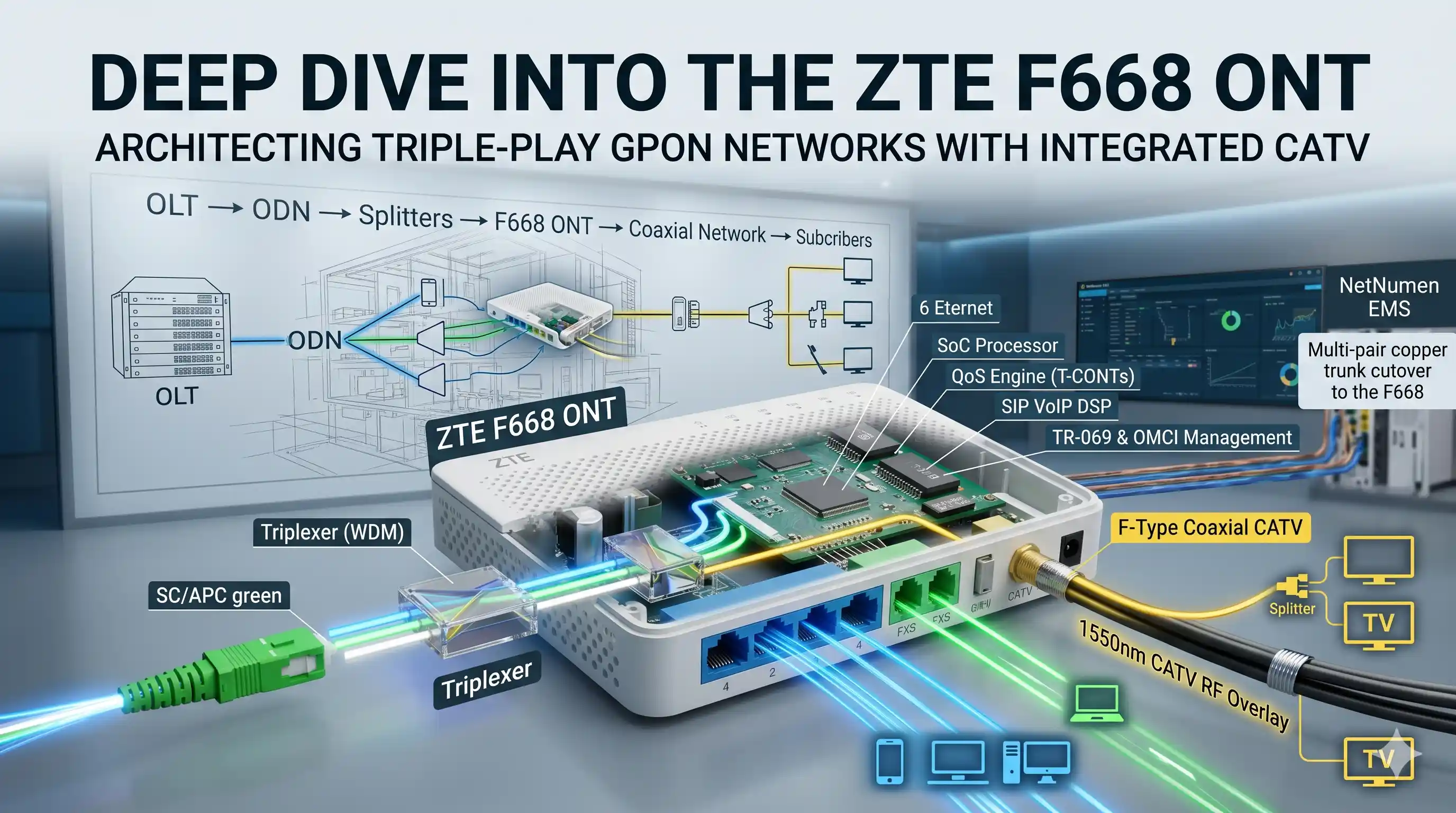
What: This comprehensive whitepaper provides a profound architectural and operational analysis of the
Why: As telecommunications operators globally transition away from legacy copper architectures, the challenge of seamlessly migrating existing RF television (CATV) subscribers to fiber optics without replacing their legacy television sets or internal coaxial wiring is paramount. Understanding the triplexer optical architecture, RF overlay capabilities, and OMCI provisioning mechanics of the F668 is critical for minimizing Capital Expenditure (CapEx) and preventing subscriber churn during FTTH migrations. How: Network architects, field engineers, and ISP system administrators will learn how to leverage the tri-wavelength Optical Distribution Network (ODN) capabilities of the F668, execute granular QoS strategies via T-CONT mapping, deploy zero-touch provisioning via TR-069, and troubleshoot complex optoelectronic layer faults.
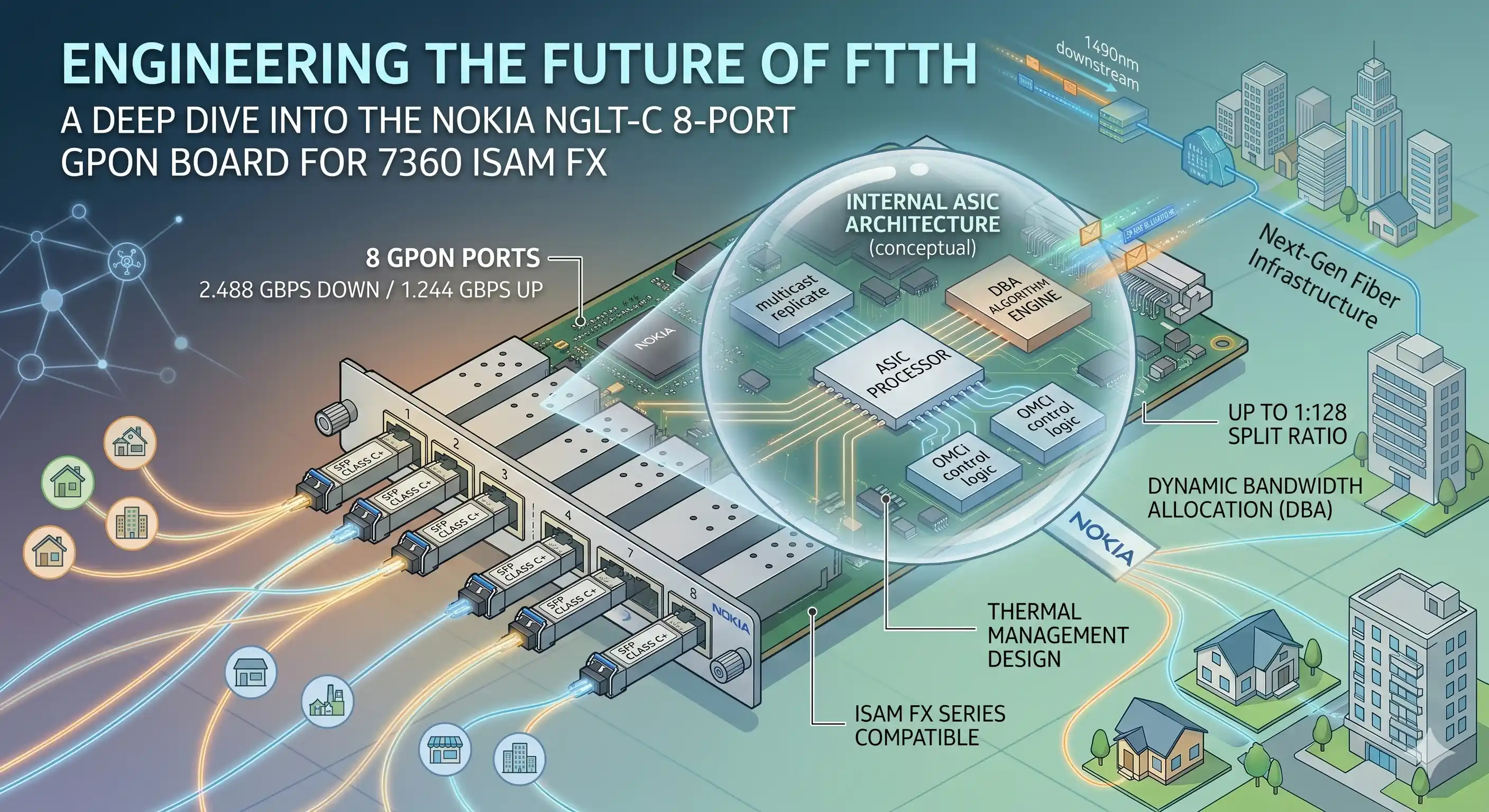
What this whitepaper covers: This comprehensive engineering analysis dissects the NOKIA NGLT-C 8-port GPON board, a cornerstone line card engineered specifically for the Nokia Alcatel-Lucent 7360 ISAM FX series Optical Line Terminals (OLT). We will explore its ASIC architecture, optical link budgets, traffic management capabilities, and seamless integration protocols.
Why it matters now: As global telecom operators accelerate their transitions from legacy copper networks to Gigabit Passive Optical Networks (GPON), ensuring optimal port density, thermal efficiency, and Quality of Service (QoS) at the access node is critical. Selecting the right hardware drastically reduces physical footprint while maximizing subscriber bandwidth allocation.
How you can leverage this data: Network architects, ISP procurement officers, and field deployment engineers will learn actionable strategies for optimizing split ratios, configuring Dynamic Bandwidth Allocation (DBA), and minimizing Total Cost of Ownership (TCO) through highly targeted hardware lifecycle management.
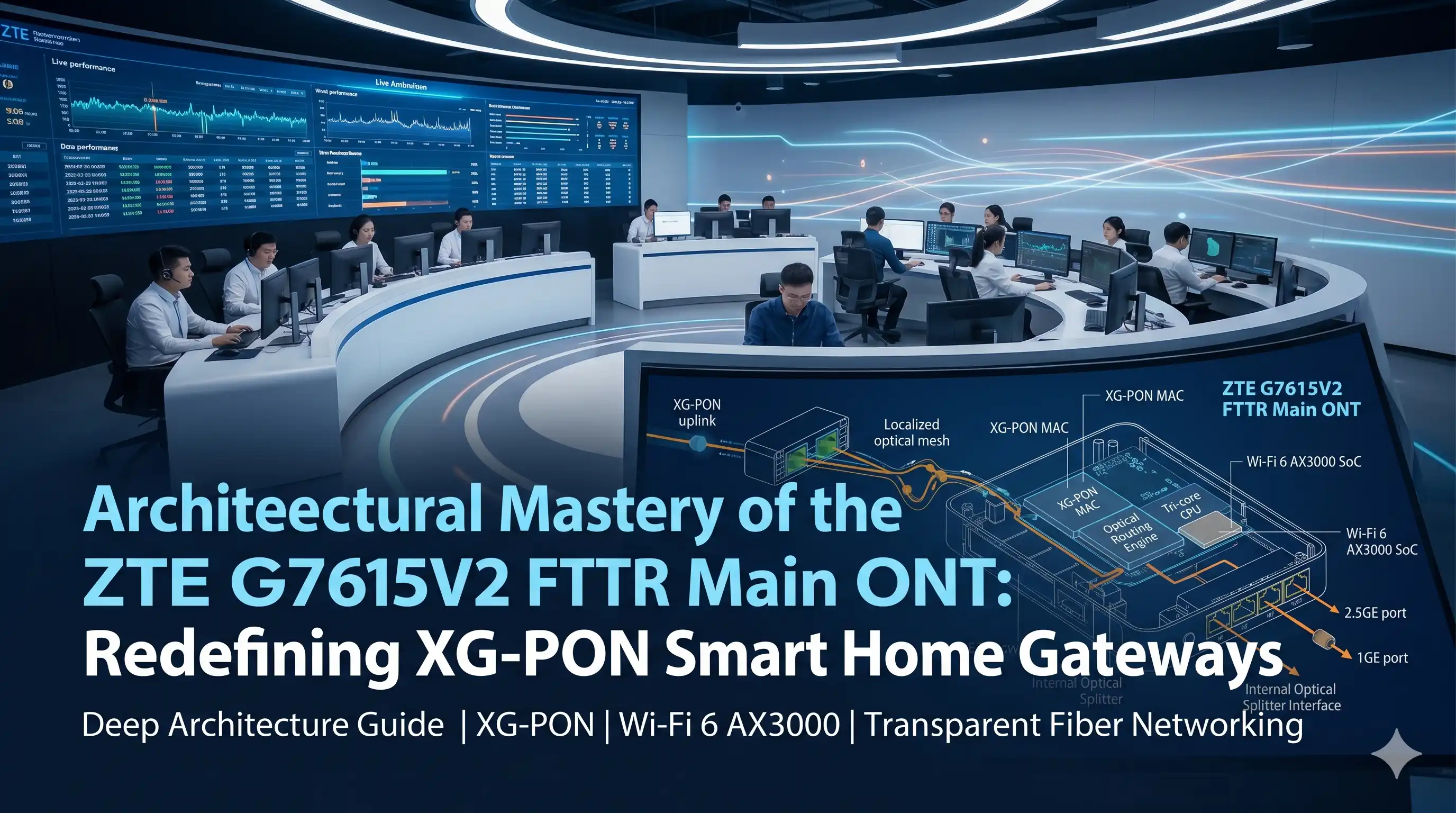
What: This comprehensive technical whitepaper provides an exhaustive architectural analysis of the ZTE G7615V2 FTTR (Fiber-to-the-Room) Main ONT. It details its hardware engineering, XG-PON uplink capabilities, asymmetric switching capacities, and its role as the centralized master node in highly dense optical mesh networks.
Why: As gigabit and multi-gigabit broadband services become the global standard, traditional Fiber-to-the-Home (FTTH) deployments are facing severe indoor bottlenecks due to legacy copper wiring and Wi-Fi signal attenuation. Understanding the shift toward FTTR topologies is critical for telecommunication operators and network architects aiming to deliver uncompromising, zero-latency 10G PON connectivity directly into every room of a residential or enterprise environment.
How: Through detailed component breakdowns, protocol analyses, and deployment methodologies, network engineers and ISPs will learn how to architect flawless optical local area networks (OLANs), optimize Wi-Fi 6 AX3000 coverage, and maximize average revenue per user (ARPU) utilizing the ZTE G7615V2 platform.
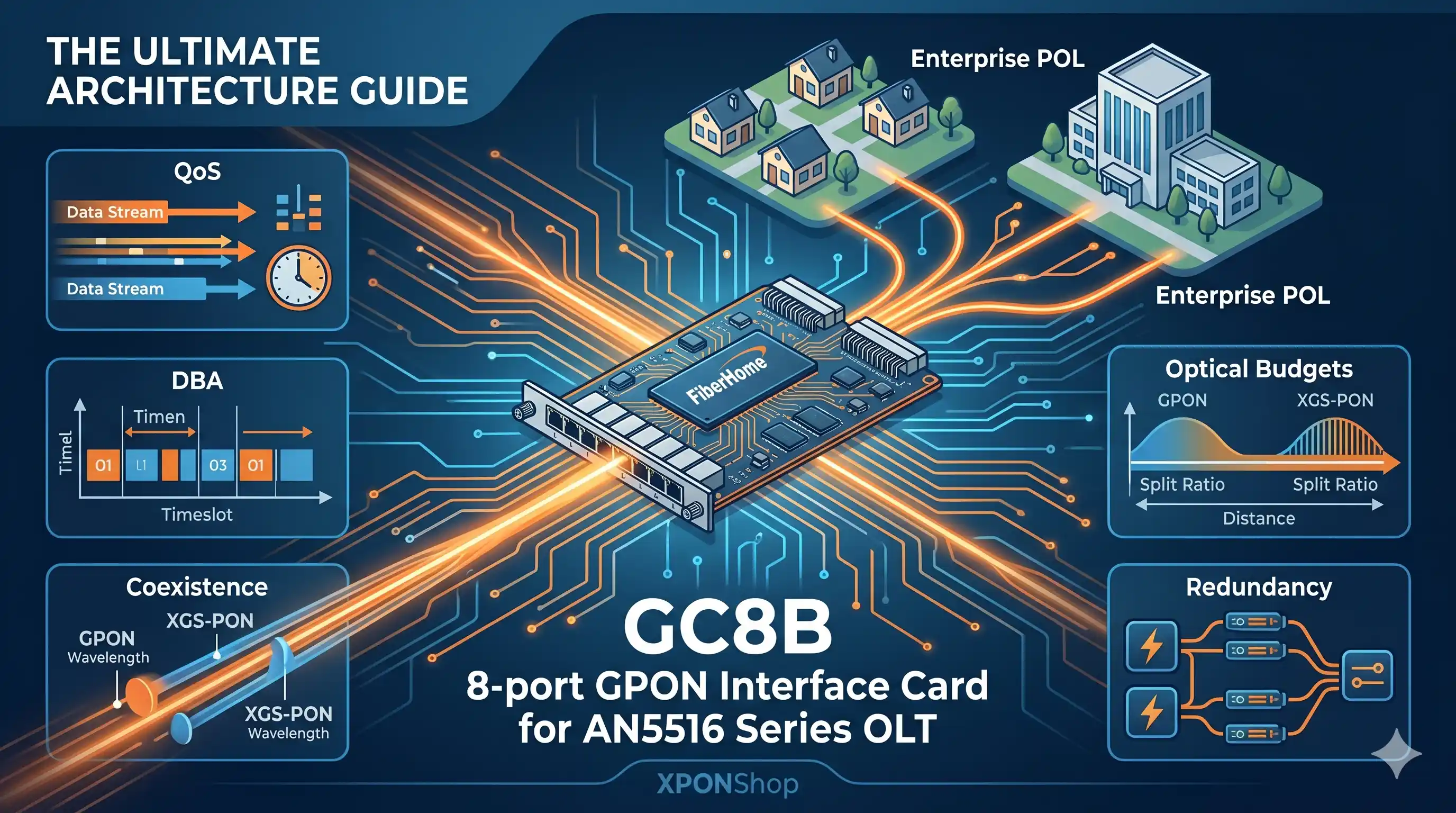
The evolution of modern broadband infrastructure relies heavily on scalable, high-density optical access nodes. This engineering whitepaper provides an exhaustive architectural analysis of the FiberHome GC8B 8-port GPON Interface Card for AN5516 series OLT, a critical component in carrier-grade Fiber-to-the-Home (FTTH) and enterprise Passive Optical LAN (POL) deployments.
As network operators face unprecedented bandwidth demands, understanding the hardware capabilities of your Optical Line Terminal (OLT) is essential to avoiding backplane bottlenecks and maintaining strict Quality of Service (QoS). By reading this technical guide, network architects will learn how to calculate precise optical power budgets, configure dynamic bandwidth allocation (DBA), and seamlessly deploy the GC8B within the AN5516 chassis. Whether you are extending rural broadband or upgrading a metropolitan central office, mastering these Layer 2 and Layer 3 traffic protocols will ensure a highly resilient and future-proof optical layer.