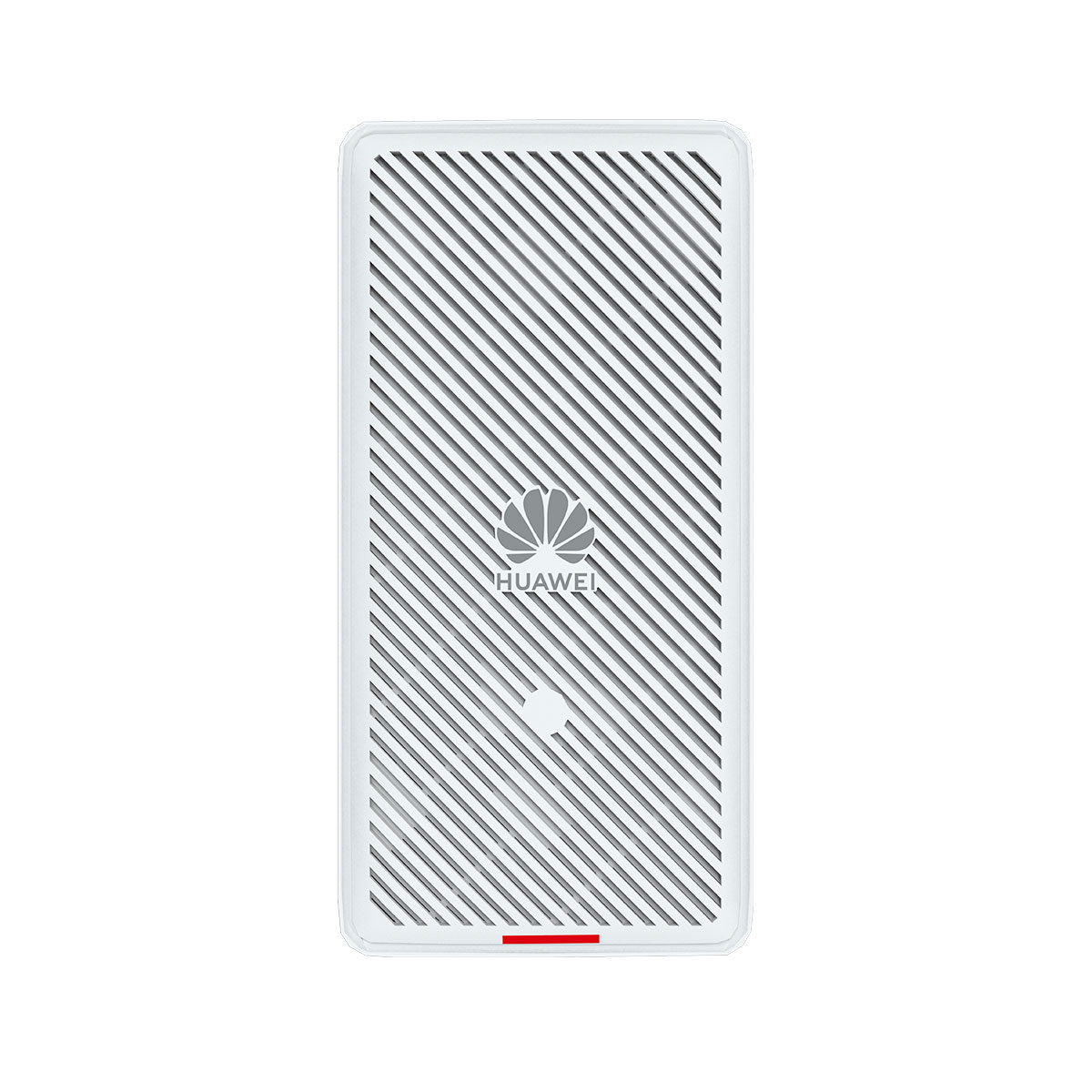
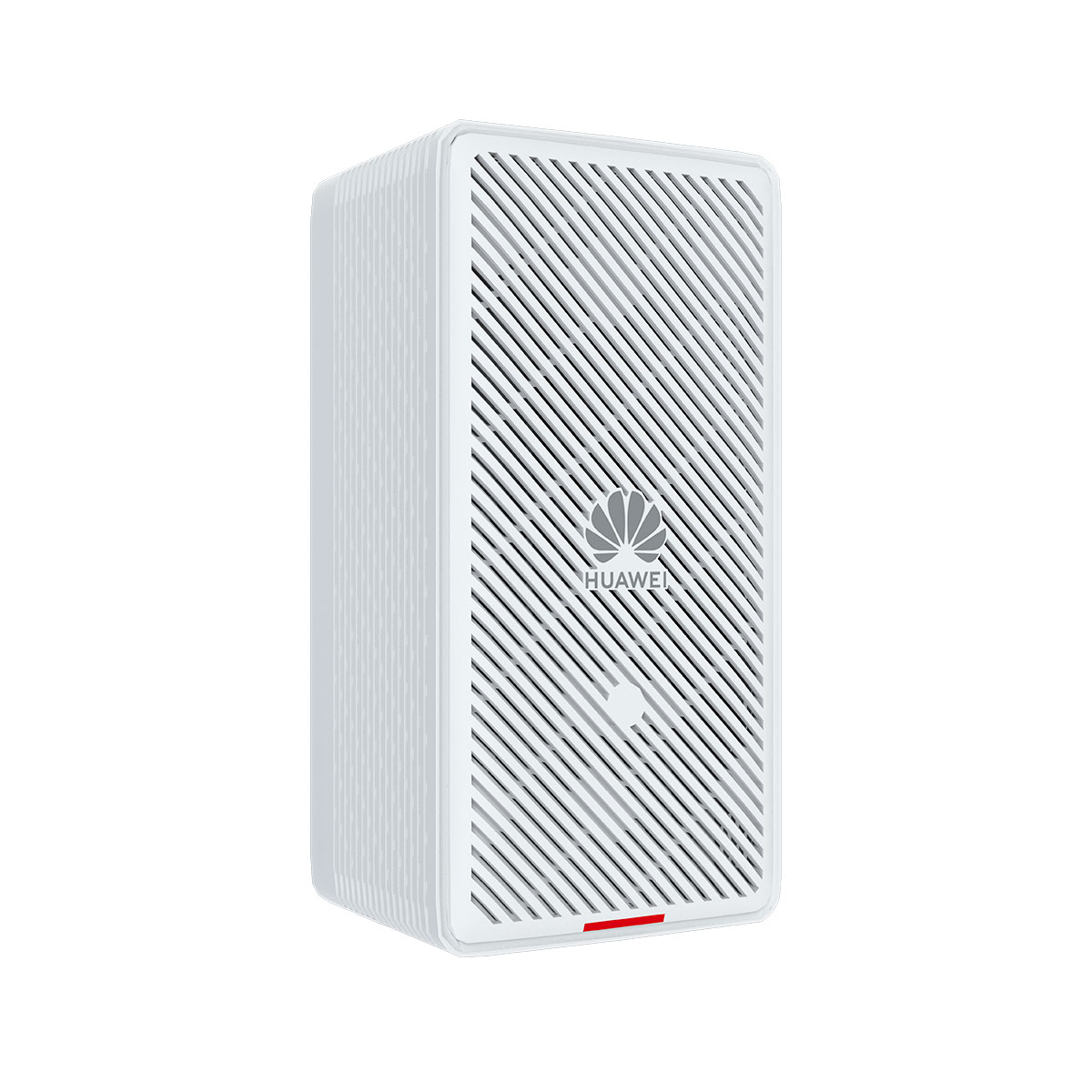




AirEngine5760-22W (11ax indoor,2+4 dual bands,smart antenna,USB,BLE,PSE) p/n 02353KBE
Huawei AirEngine 5760-22W is a Wi-Fi 6 (802.11ax) wall plate access point (AP).
It can simultaneously provide services on 2.4 GHz (2x2 MIMO) and 5 GHz (4x4 MIMO) frequency bands, achieving a device rate of up to 5.37 Gbps.
With mounting brackets, AirEngine 5760-22W can be quickly installed on 86 mm, 118 mm, or 120 mm junction boxes and walls.
Built-in smart antennas of the AP enable always-on Wi-Fi signals for users, significantly enhancing users' wireless experiences. AirEngine 5760-22W provides uplink optical and electrical ports, allowing customers to select different deployment modes and saving customers' investment.
These strengths make AirEngine 5760-22W ideal for scenarios with high-density rooms such as hotel guest rooms, dormitory rooms, and hospital wards.
| Item | Specification |
| Installation Type | Wall |
| Junction Box (86 mm/1-Gang 120 mm/Octagonal/118 mm/2-Gang 120 mm) | |
| Dimensions without packaging (H x W x D) [mm(in.)] | 170 mm x 86 mm x 74 mm (6.69 in. x 3.39 in. x 2.91 in.) |
| Weight without packaging [kg(lb)] | 0.70 kg (1.54 lb) |
| Storage | NAND Flash 512 MB; NOR Flash 16 MB |
| Console port | BLE console |
| Maximum power consumption [W] | 25.29 (excluding USB and PoE OUT ports) |
| Maximum heat dissipation [BTU/hour] | 86.3 (without USB and PoE OUT) |
| Power supply mode | PoE |
| DC power adapter | |
| Rated input voltage [V] | 48 V |
| Input voltage range [V] | DC: 43.2 V to 57.6 V |
| PoE: 802.3bt/at | |
| Service port surge protection | PoE port: |
| Differential mode (48 V-RTN): 0.5 kV (1.2/50 us, 42 ohms), criterion B | |
| Common mode (8 wires to ground): 6 kV (1.2/50 us, 42 ohms), criterion B | |
| PoE OUT | Supported |
| Maximum PoE output power [W] | 13.6 W (When the maximum transmission distance through a CAT5E Ethernet cable is 40 m, the port can connect to an 802.3af-compliant PD requiring power of less than 12.95 W.) |
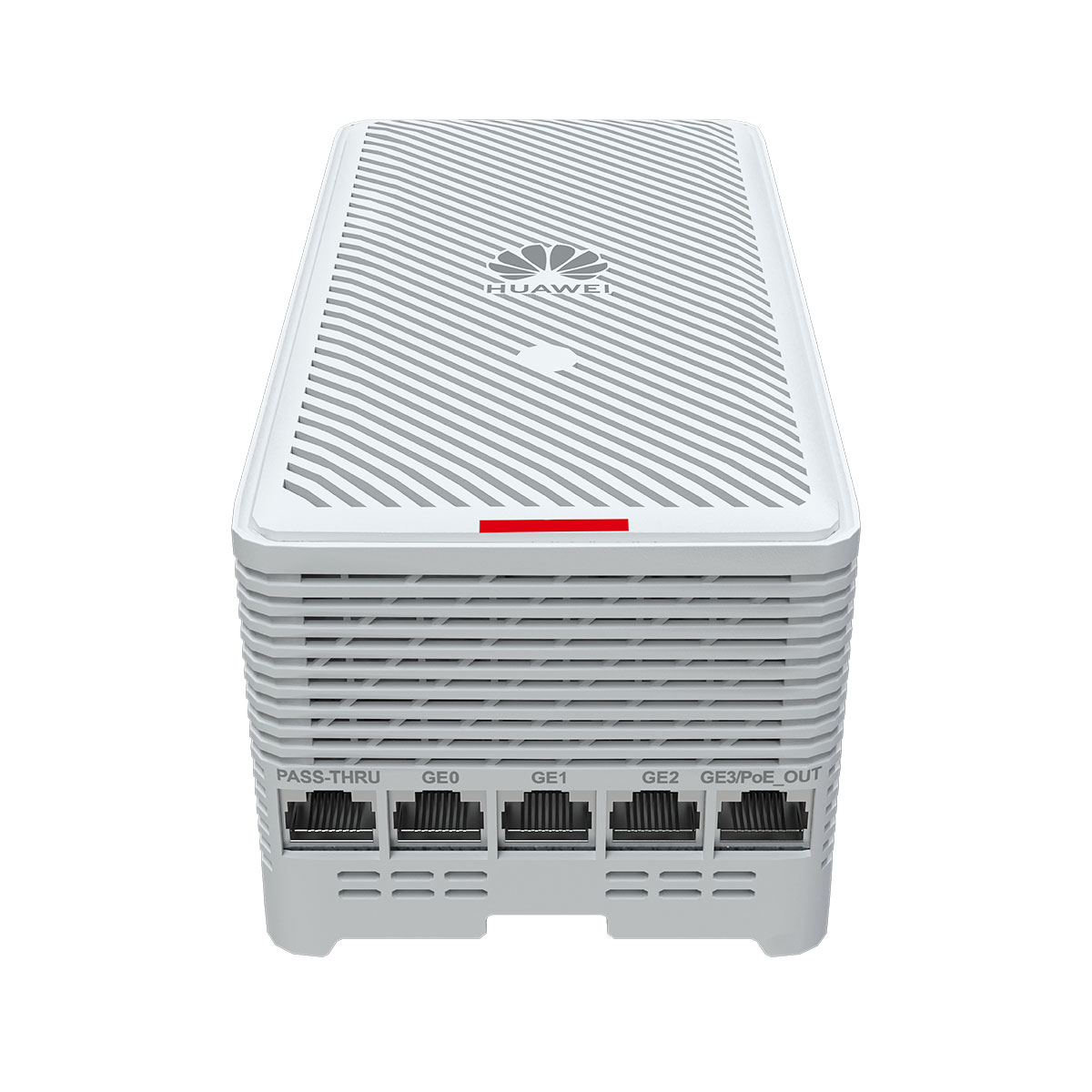
| Maximum number of physical ports on the entire device | 2.5GE (RJ45) x 1, 10M/100M/1000M/2.5GE auto-sensing |
| GE (RJ45) x 4, 10M/100M/1000M auto-sensing | |
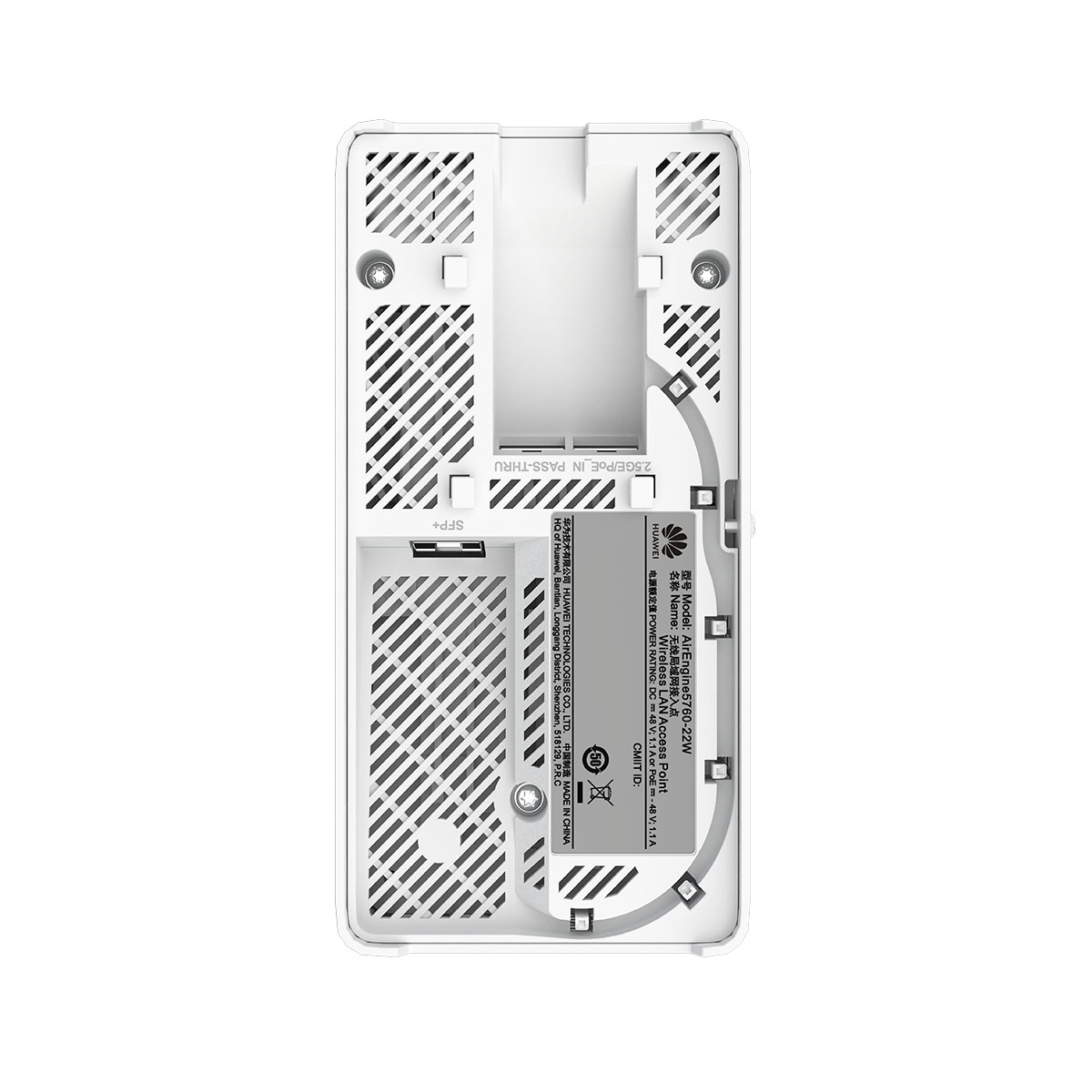
| 10GE optical port (SFP+), GE/10GE auto-sensing | |
| Long-term operating temperature [°C(°F)] | 0°C to 40°C (32°F to 104°F) (From 1800 m to 5000 m [5905.51 ft. to 16404.20 ft.], the maximum ambient temperature decreases by 1°C [1.8°F] for every 300 m [984.25 ft.] increase in altitude.) |
| Storage temperature [°C(°F)] | –40°C to +70°C (–40°F to +158°F) |
| Long-term operating relative humidity [RH] | 5% RH to 95% RH, non-condensing |
| Long-term operating altitude [m(ft.)] | –60 m to +5000 m (–196.85 ft to +16404.20 ft) |
| Atmospheric pressure [kPa] | 53kPa - 106kPa ETSI 300 019-2-3 |
| Ground | Floating ground |
| USB | USB 2.0, supporting 2.5 W power supply. |
| IoT slot | IoT extension by USB |
| BLE | BLE5.0 |
| Radio number | 2 |
| Operating frequency band | 2.4GHz |
| 5GHz | |
| MIMO spatial streams | Radio 0 (2.4 GHz): 2x2, maximum bandwidth of 40 MHz |
| Radio 1 (5 GHz): 4x4, maximum bandwidth 160 MHz | |
| Wi-Fi standard | 2.4 GHz: 802.11b/g/n/ax |
| 5 GHz: 802.11a/n/ac/ac Wave 2/ax | |
| Radio interface | Built-in smart antennas |
| Antenna gain | 2.4 GHz: 4 dBi |
| 5 GHz: 5 dBi | |
| BLE: 4 dBi | |
| Maximum transmit power | 2.4 GHz: 23 dBm |
| 5 GHz: 26 dBm | |
| (Note: This is the total MIMO radio power, the same as: | |
| 2.4 GHz: 20 dBm/chain | |
| 5 GHz: 20 dBm/chain) | |
| BLE: < 10 dBm | |
| Singal radio transmit power [dBm] | 2.4G: -10 dBm to 20 dBm/chain |
| 5G: -10 dBm to 20 dBm/chain | |
| MTBF [year] | 37 year |
| MTTR [hour] | 0.5 hour |
| Frequency stability [ppm] | +/-20 |
| 802.3bt power supply description | Wi-Fi: |
| If no optical port is used, Wi-Fi is not restricted. | |
| If optical ports are used, Wi-Fi supports only the 2.4 GHz (2x2, 20 MHz bandwidth) + 5 GHz (2x2, 80 MHz bandwidth) working mode, and the radio transmit power is not affected. | |
| Wired network port: The 2.5GE electrical port and SFP+ optical port work as combo ports. When one of them is working, the other is unavailable. The four downlink ports are all available. | |
| Other ports: not restricted | |
| 802.3at power supply description | Wi-Fi: |
| If the USB and PoE out ports are not used and only the 2.5GE electrical port is used as the uplink port, Wi-Fi supports the 2.4 GHz (2x2, 20 MHz bandwidth) + 5 GHz (4x4, 80 MHz bandwidth) working mode, and the radio transmit power is not affected. | |
| If an optical port or the 2.5 W USB port is used, Wi-Fi supports only the 2.4 GHz (2x2, 20 MHz bandwidth) + 5 GHz (2x2, 80 MHz bandwidth) working mode, and the radio transmit power is not affected. | |
| Wired network port: The 2.5GE electrical port and SFP+ optical port work as combo ports. When one of them is working, the other is unavailable. The four downlink ports are all available. | |
| Other ports: Only the 2.5 W USB port is supported. The 5 W USB port and PoE OUT port are unavailable. | |
| 802.3af power supply description | The 802.3af power supply is not supported. |
| DC power supply description | Wi-Fi: |
| If no optical port is used, Wi-Fi is not restricted. | |
| If optical ports are used, Wi-Fi supports only the 2.4 GHz (2x2, 20 MHz bandwidth) + 5 GHz (2x2, 80 MHz bandwidth) working mode, and the radio transmit power is not affected. | |
| Wired network port: not restricted | |
| Other ports: not restricted |