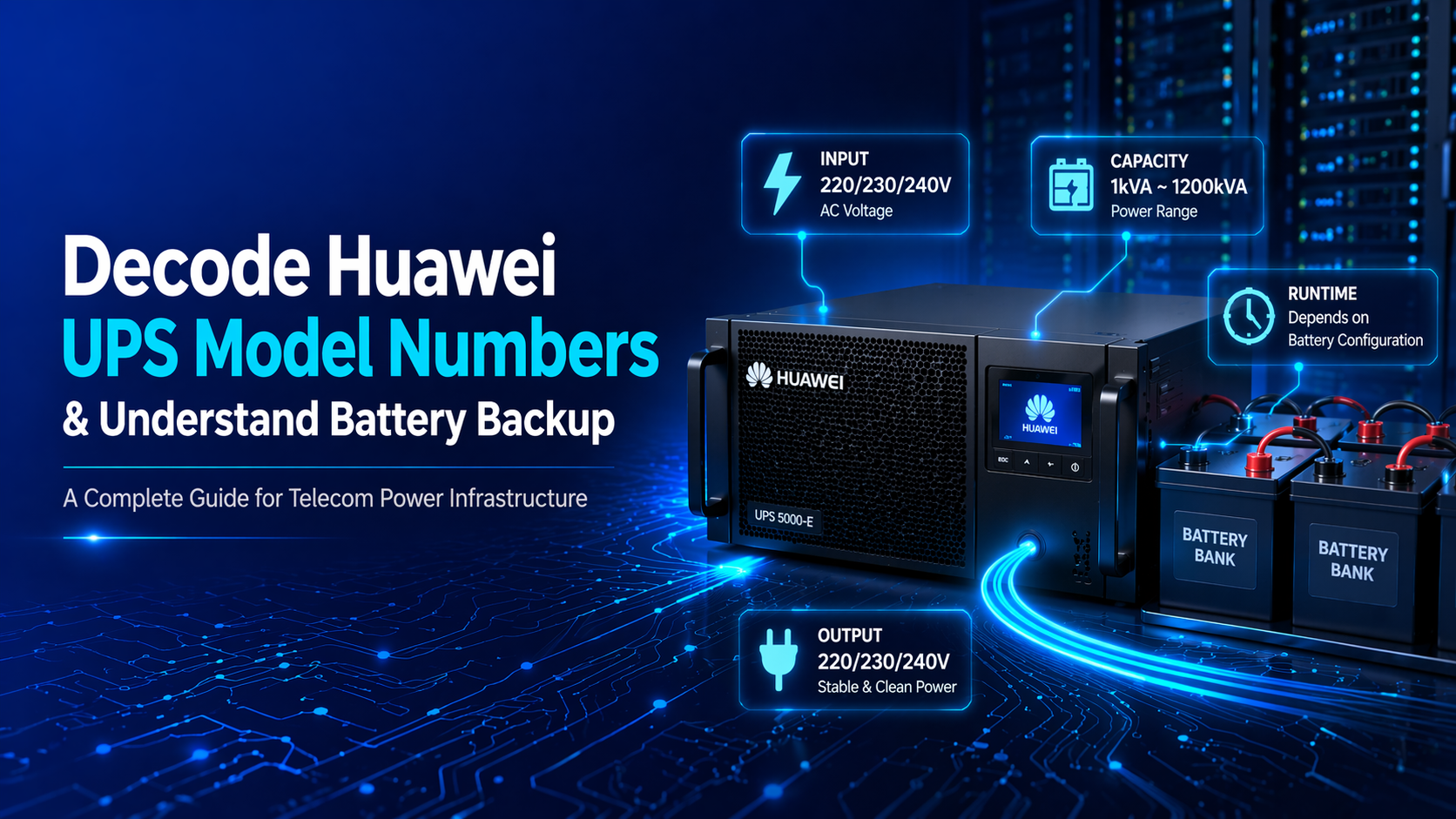
 Decode Huawei UPS Model Numbers and Understand Battery Backup
16 Apr, 2026. Posted by:XPONSHOP
Most Views Posts
Upgrading Huawei AC Device via the Web Platform
2025-10-22 09:07:35
Troubleshooting OLT Uplink Port Dropping Packets: Optical Interfaces, Stacking Errors & L3 Protocols
2026-07-20 10:37:28
Troubleshooting ONT WAN Configuration Save Failures: OLT Push Persistence, OMCI Errors & CLI Recovery FAQ
2026-09-30 10:51:09
Popular Posts
Troubleshooting ONT VPN Client: Optical Interfaces, Stacking Errors & L3 Protocols
2026-08-04 09:52:18
Troubleshooting ONT WAN Connection: Optical Interfaces, Stacking Errors & L3 Protocols
2026-08-12 11:33:46
Zero-Trust Access Gateway Enforcement on ISP Enterprise Perimeter Firewalls - Official Technical Overview & Hardware Datasheet
2026-10-08 11:34:22
Random Posts
Cisco Catalyst 3850 Series Layer 3 Switch - Official Technical Overview & Hardware Datasheet
2026-07-10 10:59:30
How do I configure IGMP Snooping and IGMP Proxy on an ONT for IPTV multicast? FAQ: Expert Answers to Network Integration & Configuration Questions
2026-10-08 11:47:07
AI Optical Transceivers vs. Telecom Optical Transceivers: Two ‘Personalities’ of the Same Component
2026-10-30 11:30:33
Can a Standard ONT Be Damaged by Plugging It Into an Active Fiber Without an Optical Splitter: A Deep Dive Into Optical Overload Physics, Receiver Thresholds, and ITU-T Compliance
2026-10-21 09:38:30
What's the Difference between PoE, PoE+, and PoE++ on Huawei Switch?
2025-10-22 09:05:34
Recent Posts
AI Optical Transceivers vs. Telecom Optical Transceivers: Two ‘Personalities’ of the Same Component
2026-10-30 11:30:33
Overcoming Network Bottlenecks: Enterprise Configuration Manual for Nintendo Switch NAT Type D Resolution
2026-10-30 10:06:06
Cisco Business 350 Series Managed Switch Physical Security and Power Efficiency - Official Technical Overview & Hardware Datasheet
2026-10-30 10:03:46
About
XponShop blog describes some basics for Huawei / ZTE /
Nokia / FiberHome GPON OLT, ONT, SFP, and Site Power...
such as configurations, issue troubleshooting, knowledge
sharing, and keeps updating.
Recent posts
 AI Optical Transceivers vs. Telecom Optical Transceivers: Two ‘Personalities’ of the Same Component
27 Mar, 2025
 Overcoming Network Bottlenecks: Enterprise Configuration Manual for Nintendo Switch NAT Type D Resolution
27 Mar, 2025
 Cisco Business 350 Series Managed Switch Physical Security and Power Efficiency - Official Technical Overview & Hardware Datasheet
27 Mar, 2025
AI Optical Transceivers vs. Telecom Optical Transceivers: Two ‘Personalities’ of the Same Component
27 Mar, 2025
Overcoming Network Bottlenecks: Enterprise Configuration Manual for Nintendo Switch NAT Type D Resolution
27 Mar, 2025
Cisco Business 350 Series Managed Switch Physical Security and Power Efficiency - Official Technical Overview & Hardware Datasheet
27 Mar, 2025
Products from the blog
When choosing an uninterruptible power supply (UPS), many customers feel confused by complex model names and battery backuptime. However, for Huawei UPS systems, these model numbers are not random—they follow a clear logic that describes the product’s key specifications.
Why Understanding UPS Model Numbers Matters
A UPS model number is more than just a product code—it actually tells you:
- Power capacity
- Installation type
- Battery configuration
- Backup time capability
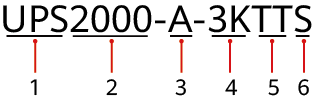
Example: UPS2000-A-3KTTL
UPS = uninterruptible power system
2000 = capacity) ≤ 20 kVA
A = tower-mounted type
3K = Output capacity Unit 3 kVA
TT = tower-mounted type
L = Long backup time (external batteries)
Key Components
UPS models
Each configuration has standard backup time or long backup time.
We can easily understand Huawei UPS model numbers follow a clear structure:
UPS + Series + Type + Capacity + Installation + Backup
Understanding this helps you select the right product quickly and accurately.
Battery Electrical Specifications
Kindly note for the backup time, standard backup time model: has built-in and fixed battery with limited back time ≥ 4 minutes (at rated full load), the precise duration as per tested result by factory before delivery; long backup time model: depending on the capacity of external batteries.
Power backup specifications of the battery box
Ref.:
·Lower Load = Longer Runtime
The UPS runtime increases significantly when the load decreases.
·More Battery Cabinets = Longer Runtime
Doubling battery capacity nearly doubles runtime.
·1kVA, 2kVA, and 3kVA Show Similar Results
Runtime is mainly determined by battery capacity and load, not just UPS rating.
In real engineering projects:
·Do not design based on 100% load runtime only.
·Use 50%–75% load as a realistic planning reference.
·Always keep at least 30% battery margin for safety.
If you need more technical support about UPS or have any UPS project, please email us at sales@xponshop.com.
END