


An introduction to Huawei UPS model numbers and battery backup.
Read more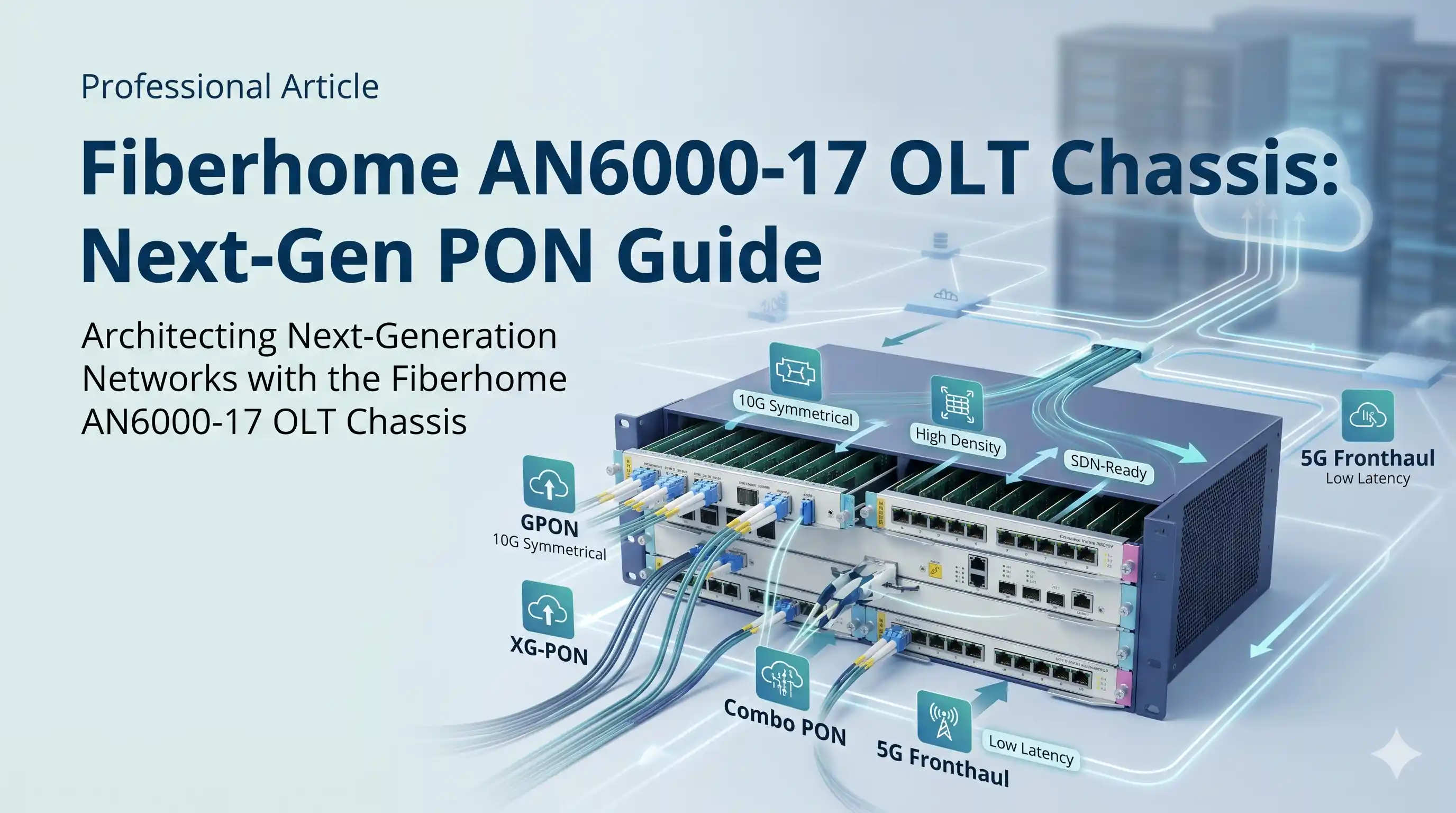
The transition to multi-gigabit access networks requires robust, highly scalable hardware. This article explores the Fiberhome AN6000-17 OLT Chassis, a carrier-class optical line terminal designed to aggregate massive bandwidth for modern FTTx deployments. As telecommunications operators face exponential data growth driven by 5G fronthaul, cloud computing, and high-definition streaming, relying on legacy GPON infrastructure is no longer viable. Upgrading to an SDN-ready, high-density chassis like the AN6000-17 is critical for maintaining competitive SLAs and reducing OpEx. In this comprehensive guide, network engineers and IT decision-makers will learn the core hardware architecture, strategies for smooth migration to XGS-PON, and best practices for implementing Combo PON technology to future-proof their network topologies.
Read more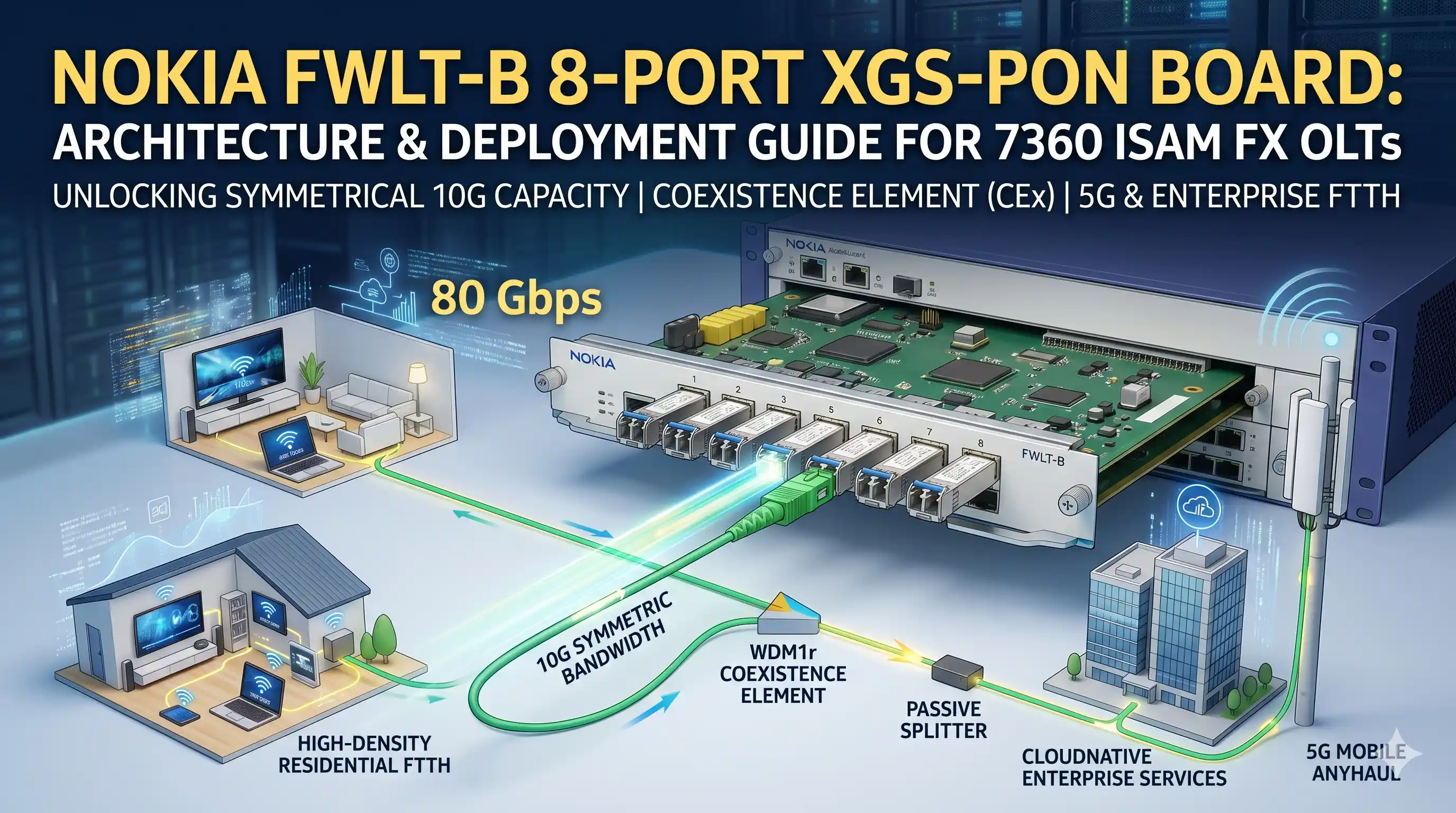
As legacy Gigabit Passive Optical Networks (GPON) reach their capacity limits, telecommunications operators are rapidly migrating to multi-gigabit infrastructures. This technical whitepaper provides a comprehensive architectural deep-dive into the NOKIA FWLT-B 8-port symmetric 10G GPON (XGS-PON) board, a critical line card designed for the Nokia Alcatel-Lucent 7360 ISAM FX series Optical Line Terminals (OLTs). In this guide, we explore why the shift to symmetrical 10 Gbps bandwidth is structurally imperative to support cloud-native enterprise services, 5G mobile Anyhaul, and high-density residential broadband. Readers will gain actionable engineering insights into how to execute seamless Optical Distribution Network (ODN) upgrades using WDM1r coexistence strategies, optimize Dynamic Bandwidth Allocation (DBA) for strict Quality of Service (QoS), and leverage Software-Defined Networking (SDN) for zero-touch provisioning. By mastering the capabilities of the FWLT-B, network architects can future-proof their fiber infrastructure while maximizing Return on Investment (ROI).
Read more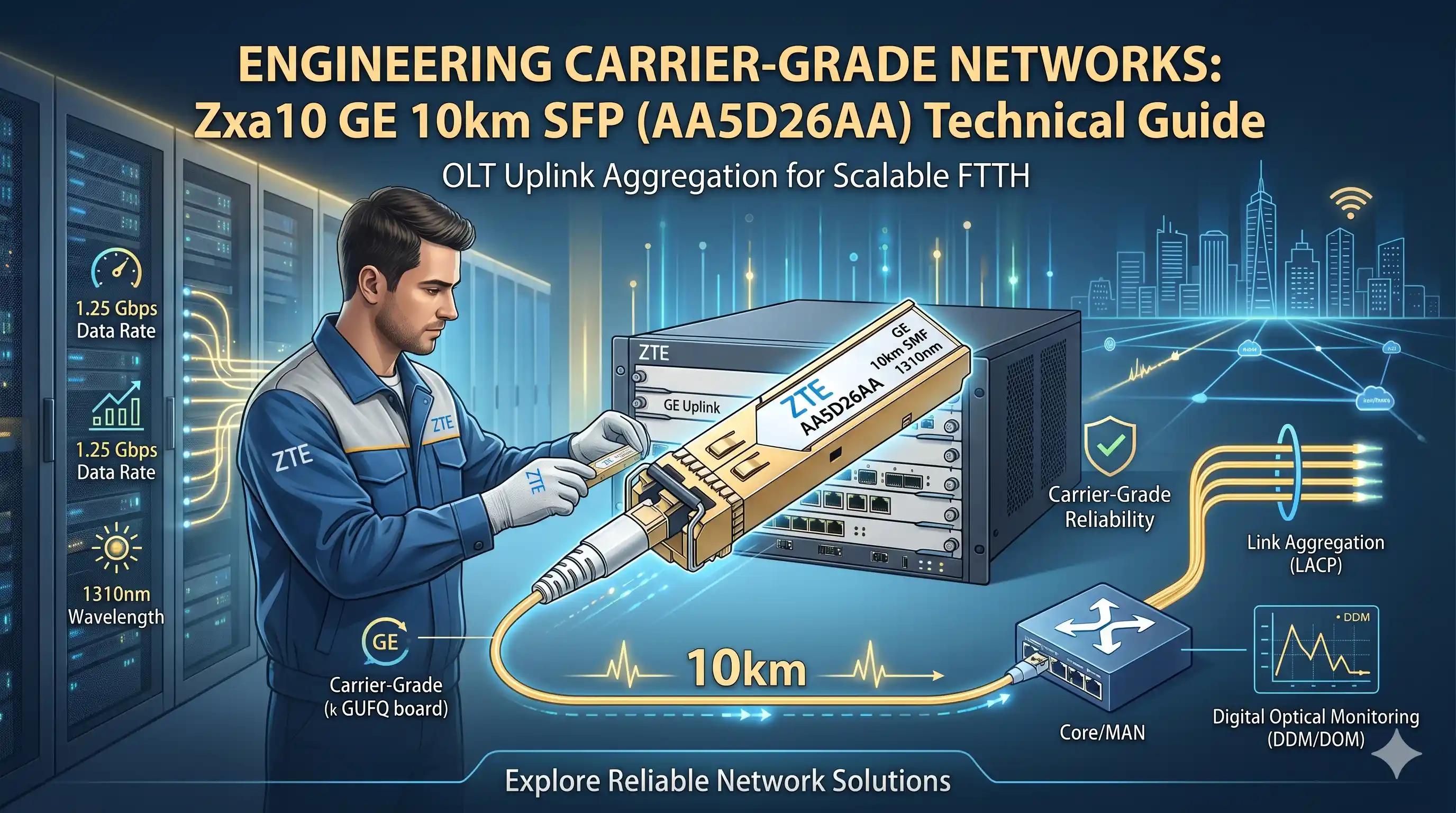
What: This comprehensive technical whitepaper provides an architectural breakdown of the ZTE GE 10km SFP (Part Number: AA5D26AA), a dedicated Gigabit Ethernet optical transceiver engineered for northbound uplink aggregation within ZTE Optical Line Terminals (OLTs).
Why: As fiber-to-the-home (FTTH) and enterprise Passive Optical Networks (PON) scale to accommodate high-bandwidth applications, the northbound uplink becomes the most critical chokepoint. Relying on sub-standard or incompatible optics for OLT uplinks results in frame degradation, latency spikes, and severe Service Level Agreement (SLA) breaches. Mastering the physical tolerances, optical link budgets, and system integration mechanics of the AA5D26AA is essential for maintaining uncompromising network availability.
How: Through this guide, telecommunications architects, network engineers, and B2B procurement specialists will learn how to calculate precision insertion loss profiles over 10km of Single-Mode Fiber (SMF), accurately provision the module within ZTE ZXA10 C300, C320, and C600 chassis platforms, and deploy Link Aggregation Control Protocol (LACP) alongside Digital Diagnostic Monitoring (DDM) to build highly resilient, fault-tolerant aggregation layers.
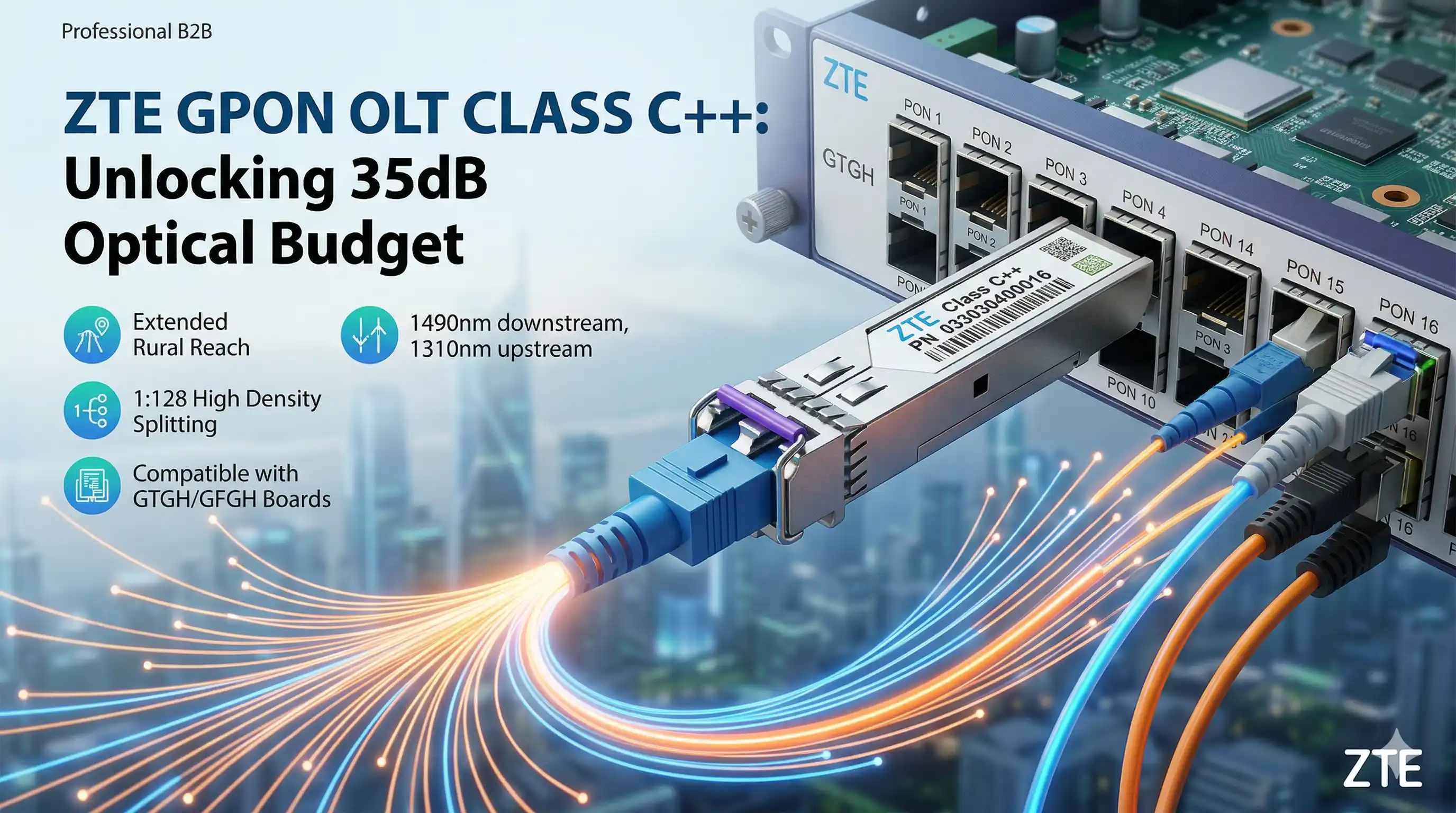
What: This highly technical engineering whitepaper dissects the optical transmission capabilities, hardware architecture, and deployment strategies of the ZTE GPON OLT Class C++ optical transceiver (Part Number: 033030400016), specifically integrated within ZTE's premier GPON service boards including the GTGH, GTGO, GFGH, GFGM, GFGL, GFGN, and GFGO series.
Why: As Internet Service Providers (ISPs) and enterprise data centers scale their FTTH (Fiber to the Home) and FTTB (Fiber to the Building) networks, overcoming the physical limitations of the Optical Distribution Network (ODN) is paramount. Upgrading to Class C++ optics provides an unprecedented 35 dB optical power budget, enabling 1:128 split ratios and extending geographical reach by up to 40%, drastically reducing the Central Office (CO) CAPEX.
How: Network architects and B2B procurement officers will learn the exact physical layer parameters, attenuation mathematics, and thermal management strategies required to deploy these high-density ZTE GPON boards. By leveraging the insights in this guide, operators can architect ultra-reliable, high-capacity passive optical networks capable of supporting next-generation multi-gigabit services.

Abstract: What: This comprehensive engineering whitepaper explores the technical architecture, network protocols, and deployment strategies of the XPON P4021A ONT (Optical Network Terminal). It dissects the device's dual-mode (EPON/GPON) System-on-Chip (SoC), Layer 2/3 routing capabilities, and optical transceiver specifications.
Why: As global Internet Service Providers (ISPs) migrate from legacy copper to hyper-dense Fiber-to-the-Home (FTTH) architectures, maintaining separate EPON and GPON inventory creates massive operational expenditure (OPEX) bottlenecks. A universal, auto-sensing XPON gateway is critical for mitigating interoperability issues and streamlining Optical Distribution Network (ODN) management.
How: Network architects and telecom engineers will learn actionable strategies for implementing Dynamic Bandwidth Allocation (DBA), executing zero-touch provisioning via TR-069 and OMCI, and configuring advanced Quality of Service (QoS) parameters. By leveraging the insights in this guide, operators can maximize the ROI of their optical infrastructure while delivering carrier-grade multi-play services (data, voice, and IPTV) to end-users.