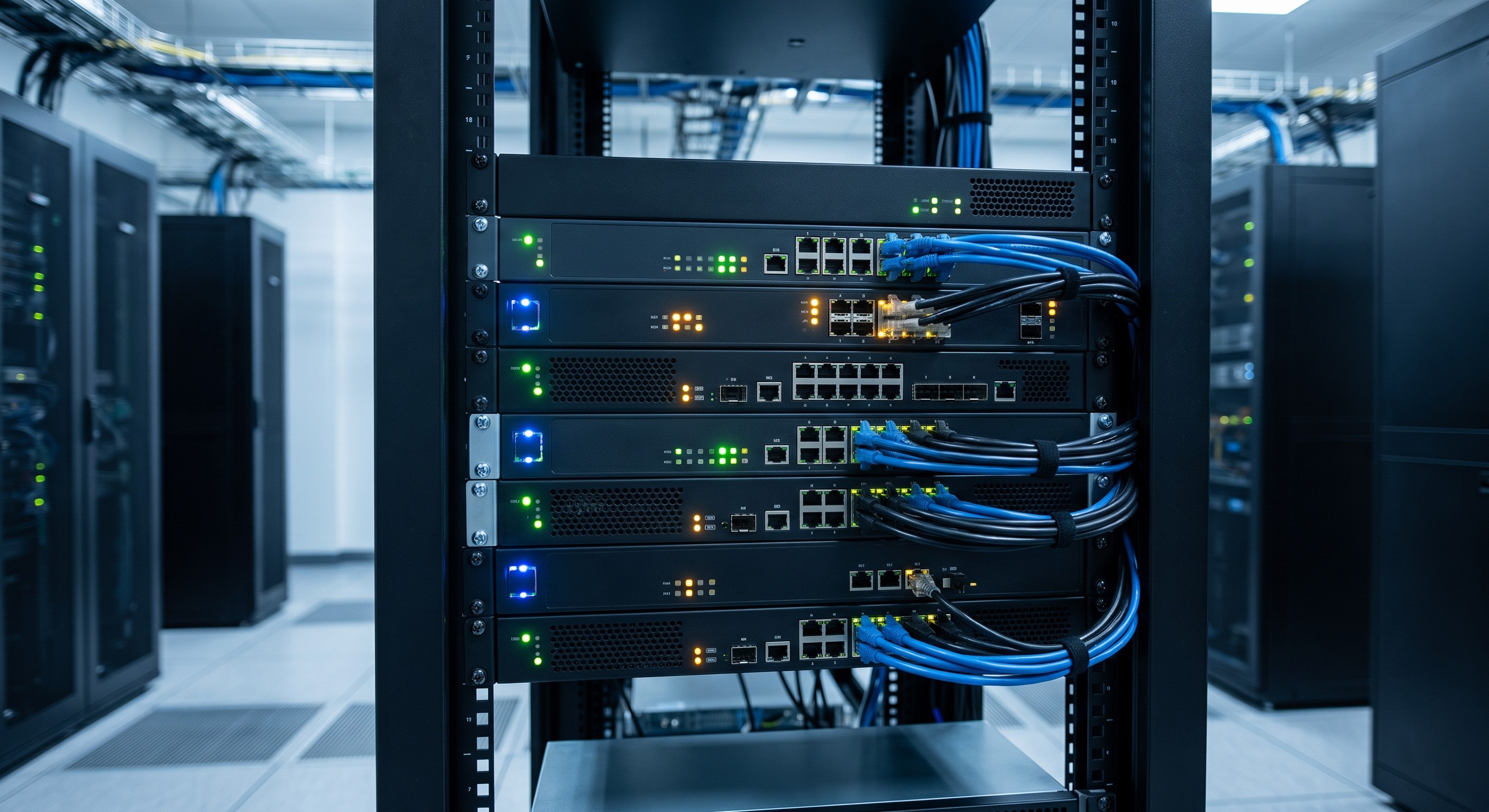
 Huawei USG Firewall IPsec VPN Tunnel Optimization and Diagnostics Reference - Official Technical Overview & Hardware Datasheet
28 Aug, 2026. Posted by:XPONSHOP
Most Views Posts
Overcoming Network Bottlenecks: Enterprise Configuration Manual for ONT Registration Failure Due to Excessive Optical Signal Level
2026-09-17 11:59:05
ZXA10 C300 OLT PRWG Power Board - Official Technical Overview & Hardware Datasheet
2026-07-02 12:57:16
Troubleshooting XPON ONUs: Optical Interfaces, Stacking Errors & L3 Protocols
2026-08-14 11:20:57
Popular Posts
Data-Driven Evaluation: Quantified Network Throughput Gains from Your 48 Port Gigabit Switch Supplier
2026-05-21 15:44:14
Troubleshooting IPTV Box Unable to Get IP Address from Designated ONT Port: Optical Interfaces, Stacking Errors & L3 Protocols
2026-10-12 10:47:22
Enterprise Core Systems Engineering Reference Manual: Modular Architecture Switch Price
2026-05-25 15:02:53
Random Posts
Modular Architecture Switch Price FAQ: Expert Answers to Network Integration & Configuration Questions
2026-05-25 14:59:46
XPONSHOP Pre-Shipping Automated Test Bench Diagnostic Parameter Output Schema - Official Technical Overview & Hardware Datasheet
2026-09-10 10:09:32
Maximizing Core Network ROI: A Total Cost of Ownership Analysis of OEM Alternatives
2026-08-13 11:47:07
Recent Posts
AI Optical Transceivers vs. Telecom Optical Transceivers: Two ‘Personalities’ of the Same Component
2026-10-30 11:30:33
Overcoming Network Bottlenecks: Enterprise Configuration Manual for Nintendo Switch NAT Type D Resolution
2026-10-30 10:06:06
Cisco Business 350 Series Managed Switch Physical Security and Power Efficiency - Official Technical Overview & Hardware Datasheet
2026-10-30 10:03:46
About
XponShop blog describes some basics for Huawei / ZTE /
Nokia / FiberHome GPON OLT, ONT, SFP, and Site Power...
such as configurations, issue troubleshooting, knowledge
sharing, and keeps updating.
Recent posts
 AI Optical Transceivers vs. Telecom Optical Transceivers: Two ‘Personalities’ of the Same Component
27 Mar, 2025
 Overcoming Network Bottlenecks: Enterprise Configuration Manual for Nintendo Switch NAT Type D Resolution
27 Mar, 2025
 Cisco Business 350 Series Managed Switch Physical Security and Power Efficiency - Official Technical Overview & Hardware Datasheet
27 Mar, 2025
AI Optical Transceivers vs. Telecom Optical Transceivers: Two ‘Personalities’ of the Same Component
27 Mar, 2025
Overcoming Network Bottlenecks: Enterprise Configuration Manual for Nintendo Switch NAT Type D Resolution
27 Mar, 2025
Cisco Business 350 Series Managed Switch Physical Security and Power Efficiency - Official Technical Overview & Hardware Datasheet
27 Mar, 2025
Products from the blog
EXECUTIVE SUMMARY
This document provides a comprehensive technical reference for the Huawei USG (Unified Security Gateway) Firewall series, focusing specifically on IPsec VPN tunnel optimization and advanced diagnostics. As enterprises accelerate their digital transformation, the demand for secure, high-performance, and resilient site-to-site and remote-access VPN connectivity has become paramount. The USG firewall platform integrates proprietary hardware acceleration, intelligent traffic steering, and deep packet inspection (DPI) to ensure that IPsec tunnels operate at line-rate speeds without compromising security posture.
This datasheet details the architectural innovations, hardware specifications, and optimization frameworks that enable the USG series to deliver deterministic performance for IPsec VPNs even under extreme network loads. It covers advanced diagnostic tools such as intelligent probe-based path detection, packet drop analytics, and real-time tunnel quality scoring (TQS). Designed for network architects, security engineers, and procurement specialists, this document serves as the definitive reference for deploying, scaling, and troubleshooting IPsec VPN infrastructures using the Huawei USG platform.
HARDWARE ARCHITECTURE & SILICON
The Huawei USG firewall series is built upon a purpose-built, multi-core network processor (NP) architecture combined with a high-speed Content Security Processor (CSP). This unified hardware forwarding plane offloads IPsec encryption, authentication, and encapsulation tasks from the main CPU, enabling symmetric and asymmetric cryptographic operations at wire speed. The internal data bus utilizes a non-blocking switching fabric capable of up to 480 Gbps of internal throughput, ensuring that IPsec tunnel aggregation and traffic classification do not introduce measurable latency.
At the heart of the system, the USG incorporates a dedicated Hardware Security Module (HSM) root of trust for secure key storage and IKE (Internet Key Exchange) session management. The platform supports both hardware-based AES-NI instructions and proprietary acceleration for SM-series cryptographic algorithms, ensuring compliance with diverse regulatory environments (China GM/T, FIPS 140-2, and Common Criteria). For diagnostics, the silicon integrates a built-in performance monitoring unit (PMU) that tracks per-tunnel packet drops, reordering, and jitter with microsecond precision, feeding data directly into the onboard telemetry engine.
KEY FEATURES & ROUTING LOGIC
- Feature 1: Intelligent IPsec Tunnel Offload (ITO) - Automatically steers IPsec crypto processing to dedicated hardware cores, achieving up to 40 Gbps of bulk encryption throughput and sustaining over 1 million concurrent IPsec security associations (SAs) in high-end chassis models.
- Feature 2: Dynamic Tunnel Quality Scoring (TQS) - The system continuously monitors synthetic packet loss, latency, and jitter across each IPsec tunnel. TQS is mapped to a score from 0-100, allowing the firewall to trigger policy-based routing decisions, tunnel failover, or adaptive compression toggling without manual intervention.
- Feature 3: Smart Path Diagnostics (SPD) - Combines ICMP, UDP, and TCP-based probes with bidirectional forwarding detection (BFD) to isolate point-of-failure in an IPsec path. SPD correlates logs from both ends of the tunnel, providing root-cause analysis for flapping or high-latency links.
- Feature 4: Per-Tunnel Packet Capture & Decryption - The USG supports selective decrypted capture for IPsec traffic based on ACL filters. This feature aids in deep forensic analysis while ensuring that sensitive user data is only decoded when an active security incident is suspected.
- Feature 5: Application-Aware Traffic Engineering (AATE) - Beyond standard QoS, AATE integrates with the IPsec SA database to classify and prioritize latency-sensitive traffic (e.g., VoIP, financial transactions) over bulky file synchronization traffic, ensuring optimal user experience across encrypted WAN links.
COMPLIANCE & STANDARDS
The Huawei USG firewall series adheres to a comprehensive suite of international and industry-specific compliance standards. The IPsec VPN implementation is fully validated against RFC 6071 for IPsec/IKE architecture, RFC 7296 for IKEv2, and RFC 4301 for the Security Architecture. Cryptographic modules meet the requirements of FIPS 140-2 Level 2 (pending validation for select models) and are EAL 4+ Common Criteria certified. Additionally, the platform supports the China Commercial Cryptography (GM/T) suite, ensuring seamless integration into government and financial sectors.
The diagnostic and optimization features are compliant with RFC 5880 for BFD and RFC 5357 for TWAMP (Two-Way Active Measurement Protocol), enabling interoperability with third-party monitoring tools. The USG series also holds NEBS Level 3 certification for carrier-grade environmental robustness and EC 60950-1 for electrical safety. All firmware updates and diagnostic data are managed through secure, signed channels, meeting the NIST SP 800-53 standards for continuous monitoring.
TECHNICAL SPECIFICATIONS
- System Throughput: Up to 160 Gbps (firewall + IPsec combined) for chassis models, 40 Gbps for modular 1RU units.
- IPsec VPN Throughput: 20 Gbps to 60 Gbps depending on model, measured with AES-256-GCM and SHA-256 authentication.
- Maximum IPsec Tunnels: 10,000 to 1,000,000 (scalable with license and hardware modules).
- Concurrent Sessions: 12 million (max) with full stateful inspection enabled.
- Cryptographic Algorithms: AES-128/192/256 (CBC, GCM), 3DES, SM1, SM4, SM2, SM3; RSA (1024/2048/4096-bit), ECDSA (P-256, P-384), and DH Groups 1-21.
- IKE Versions: IKEv1 (RFC 2409), IKEv2 (RFC 7296) with MOBIKE support.
- Network Interfaces: Combination of 10/100/1000Base-T RJ45, 1GE/10GE SFP+, 25GE/40GE QSFP+ based on model selection.
- Management Ports: 1x RJ-45 Console Port, 1x USB 3.0, 1x MGMT Ethernet Port (10/100/1000).
- Memory & Storage: 32 GB DDR4 RAM (min), 64 GB SSD for logging and packet capture storage.
- Power Supply: Dual Hot-Swappable 800W AC/DC (1+1 Redundancy), efficiency > 94%.
- MTBF: Over 250,000 hours (calculated per Telcordia SR-332).
- Operating Environment: Temperature 0°C to 45°C, Humidity 10% to 90% (non-condensing).
📥 Download Technical Specification
Click the button below to view or download the full official PDF datasheet.
⬇️ Download Official PDF